
MEP Jens Gieseke will lead a delegation from the European Parliament’s Committee on Transport and Tourism (TRAN) on a four-day visit to Greenland this week to discuss connectivity, transport infrastructure, and sustainable tourism.
The visit comes as the Arctic territory finds itself at the centre of growing geopolitical interest, fuelled by US President Donald Trump’s repeated claims to Greenland and mounting concerns about Russian and Chinese ambitions in the region.
It also comes on the heels of Trump’s announcement last Friday that Washington had reached an agreement with Denmark and Greenland to expand US military access to the territory and prevent rival powers from establishing bases there. The text has not yet been published.
The deal is expected to be signed during the UN General Assembly this week.
Danish and Greenlandic leaders insist it respects Greenland’s sovereignty and right to self-determination. A Politiken correspondent wrote that Trump had secured a victory lap rather than territory, according to the BBC.
Elsewhere, the reaction was rather positive too, with NATO welcoming the deal, and French President Emmanuel Macron saying Danish sovereignty had been respected.
Just days earlier, twelve European countries had called for a more strategic European presence in the Arctic at a meeting in Rovaniemi, while EU foreign policy chief Kaja Kallas announced a new security-focused Arctic strategy for October.
Transport and connectivity
During their visit, from 21 to 24 September, the six MEPs will visit Ilulissat, where they will meet representatives from the port, fisheries and tourism sectors, and visit the new international airport.
While in Nuuk, they are scheduled to meet with the Greenlandic authorities, the Inatsisartut parliament, the Inuit Circumpolar Council, the Joint Arctic Command, as well as maritime, fisheries, and business representatives.
Gieseke described the visit as taking place at a “particularly critical moment”, given the geostrategic significance of both Greenland and the wider Arctic region.
He added that the delegation would discuss air connectivity and aviation, air passenger rights, alongside logistics, infrastructure, maritime transport and sustainable tourism, with an emphasis on how Greenland tackles its geographical challenges while still managing to strengthen connectivity between communities and the “wider world”.
🇬🇱 21-24 September: strengthening ties with Greenland
— TRAN Committee Press (@EP_Transport) September 18, 2026
Six @EP_Transport members, led by MEP Jens Gieseke, will visit Ilulissat and Nuuk next week, to exchange on transport connectivity & sustainable tourism development
More details: https://t.co/QCT6ob81tb
EU steps up investment
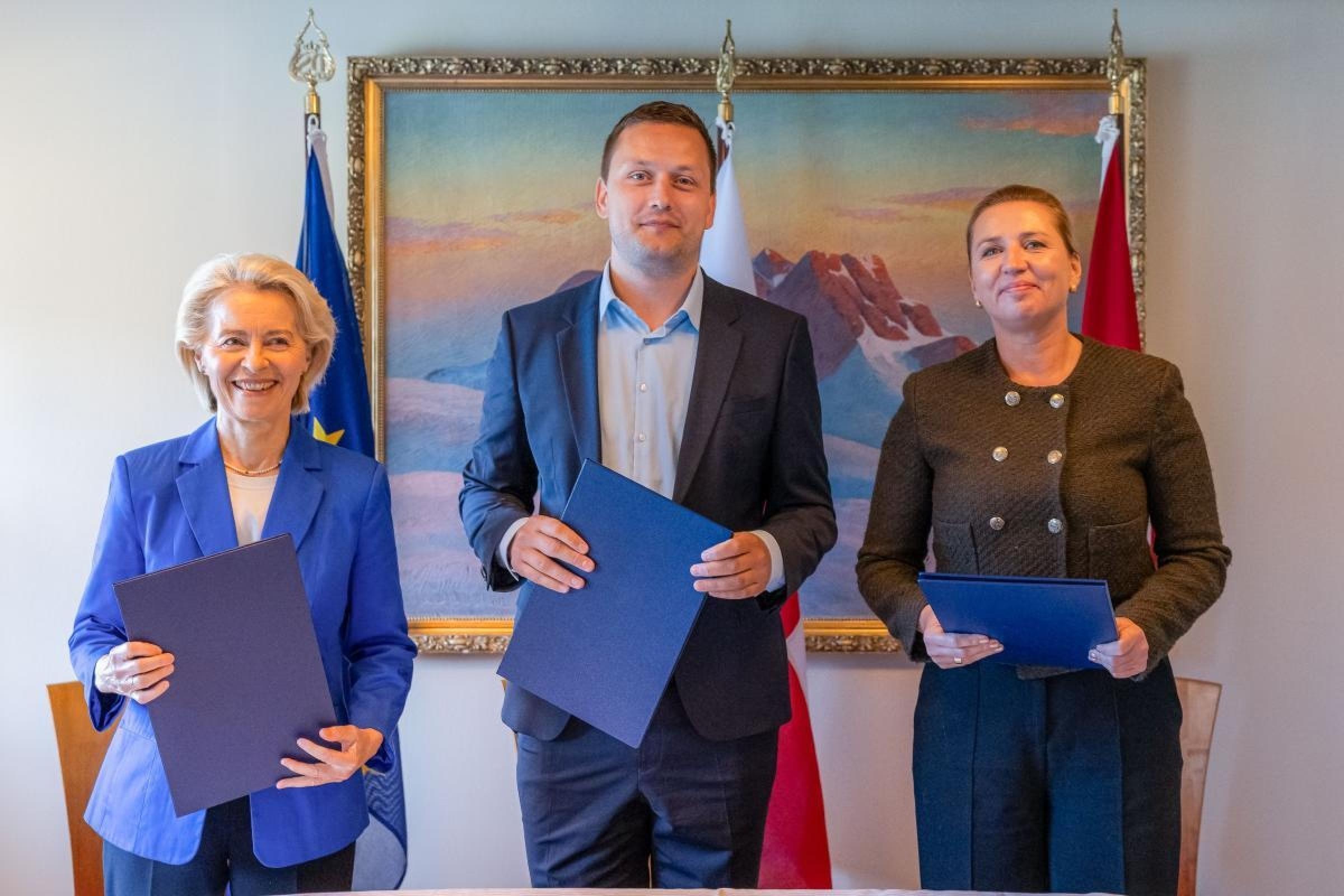
This visit follows European Commission President Ursula von der Leyen’s trip to Nuuk on 7 September, during which she announced a €200 million Global Gateway Partnership Package for the period 2026–2027.
On that occasion, the EU, Denmark and Greenland also signed a joint declaration building on the one signed in 2015. This declaration reinforces their partnership and recognises the territory’s growing strategic importance.
“Greenland can count on the EU,” said von der Leyen, describing the territory as a “strategic ally and a trusted friend”.
The new partnership covers digital connectivity, renewable energy, critical raw materials, sustainable tourism, housing, and support for small businesses.
Greenland is already the largest per capita recipient of EU support among overseas countries and territories, with €225 million earmarked for the period 2021 to 2027, 90% of which is earmarked for education. A further €530 million has been proposed for the period 2028–2034.
Tourism in the spotlight
Improved air connectivity has made Greenland more accessible to visitors. According to Statistics Greenland, the number of guests staying in registered accommodation increased by 15.4% in 2025, driven by a 46% growth in international visitors.
The European Commission has recognised sustainable tourism as an opportunity for economic diversification, private-sector development, and job creation.
The challenge now is to develop the necessary infrastructure while protecting the fragile environment of the island and ensuring that local communities benefit.