

Spain is launching a Sustainable Tourism Strategy 2030, a blueprint for transforming the country’s surging tourism sector into “a model of sustained and sustainable growth” with the input of industry stakeholders and autonomous communities.
The “participatory process” brings together the views of business, government, industry experts, and civil society, on the evolution of Spain’s tourism offer, from a decades-old “sun and beach” model, to a framework fit for dealing with new challenges and “profound social changes,” a government release explains.
Tourism in Spain has been booming, hitting a record 58.1 million international tourists during the first seven months of 2026, an uptick of 4.6% compared with the same period in 2025, itself a record year, according to the Frontur figures published by Spain’s National Statistics Institute (INE). International visitors spent €82.05 billion during the seven-month period, an increase of 7.8% year-on-year and another first.
España ofrece su experiencia al comisario @tzitzikostas para la futura Estrategia de Turismo Sostenible de la UE 🇪🇺.
— Ministerio de Industria y Turismo (@minturgob) February 26, 2026
El ministro @jordihereub y la SE de @TurismoEspGob presentan al comisario la Estrategia España Turismo 2030 como ejemplo a seguir.
🔗https://t.co/6a9rbpKh6i pic.twitter.com/yjC571CZyH
Deloitte and Google are forecasting that Spain will overtake France as the world’s most touristed nation by 2040, handling around 110 million international tourists a year by that date, compared with 105 million in France.
The economic benefits are welcome but is that volume of visitors sustainable? Spain’s success has been tempered by anti-tourism protests, with locals in popular tourist destinations complaining about anti-social behaviour by visitors, a housing crisis driven by the prevalence of short-term holiday lets, water and resource shortages, and a cost-of-living so high that Spaniards cannot afford to take vacations in their own resorts.
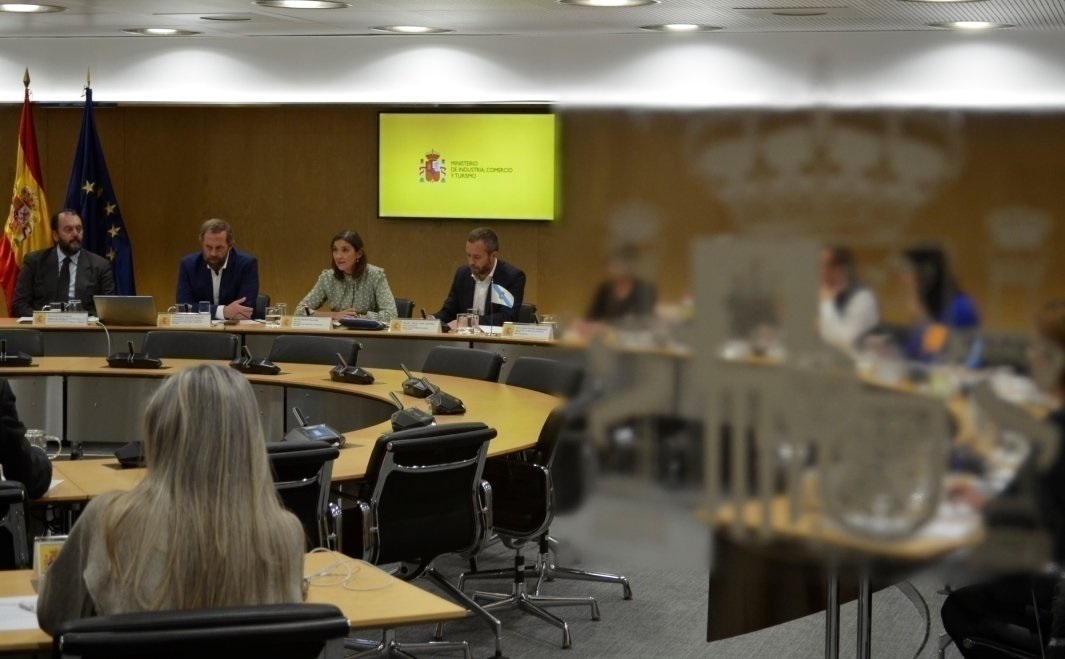
Acknowledging these existential issues at Arabian Travel Market in Dubai, Carlos Ruiz González, director of the Spanish Tourist Office for the Gulf region at Turespaña said: “We have some destinations that are dying of success, I would say.” He went on to explain that “the government of Spain decided this has to be a full government policy, a country policy, and not just tourism. All the ministries, all the sectors in Spain are aligned.”
The result is a three-phase programme, to be implemented in sequential two-year action plans, bringing public views to bear when dealing with a range of economic, environmental, and social challenges, including climate change, jobs, affordability, the rural exodus, and overtourism.
Hoy presentamos la 'Estrategia España Turismo 2030', una estrategia que, por primera vez, incorpora la emergencia climática como factor central, con medidas de mitigación y gestión de riesgos.
— Pedro Sánchez (@sanchezcastejon) October 8, 2025
Porque queremos que España sea también referente mundial del turismo sostenible. pic.twitter.com/Fze8gCVOGA
Part of the answer lies in encouraging visitors to spread their footfall and spending further and wider than the traditional holiday hotspots, drawing some holidaymakers away from the coasts and into the mountains, or highlighting the attractions of smaller towns such as Castilla. The country’s high-speed train network is seen as a key asset in making that happen.
But it remains to be seen whether Spain can maintain its strong position, whether the new model will support competition and profits while protecting natural and cultural resources—all while equitably distributing, in the words of the government, “the benefits and burdens of tourism.” And that includes sharing the responsibility for finding solutions.