

For three days, the Peelbergen Equestrian Centre in the Netherlands became the international home of one of the world’s oldest and most distinctive horse breeds, as the Akhal-Teke World Championship 2026 brought together more than 300 guests from around the world.
Held from 4 to 6 September in Kronenberg, the event combined the World Beauty Championship of Akhal-Teke horses with equestrian competitions, scientific discussions, exhibitions and cultural performances dedicated to Turkmenistan’s celebrated “golden horse”.
The gathering attracted breeders, researchers and equestrian professionals, alongside a high-level international audience of political figures, diplomats, journalists and European civil servants. Among the Dutch guests were former Prime Minister Jan Peter Balkenende and Emile Roemer, King’s Commissioner of the Province of Limburg.
As Travel Tomorrow reported ahead of the championship, the Akhal-Teke is renowned for its endurance, slender physique, intelligence and distinctive metallic coat. But in Turkmenistan, the horse represents much more than an exceptional breed. It is deeply intertwined with the country’s history, art, craftsmanship and national identity.
That cultural dimension was visible throughout the weekend.
Heritage, science and cultural dialogue
The programme began on Friday with the International Scientific and Practical Conference “Akhal-Teke Horse: The Turkmen Art of World-Class Horse Breeding” at the Asteria Hotel in Venray.
Researchers and equestrian specialists from Europe, North America and Turkmenistan approached the breed from historical, scientific, artistic and sporting perspectives. The conference also featured the presentation of the Dutch edition of The Horse as a Symbol of Faithfulness and Happiness, written by Gurbanguly Berdimuhamedov, National Leader of the Turkmen people and Chairman of the Halk Maslahaty of Turkmenistan.
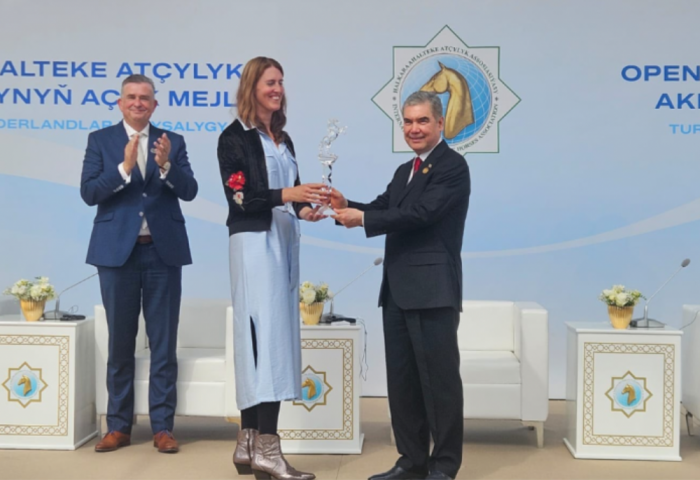
Discussions explored the Akhal-Teke not simply as an exceptional horse breed, but as part of a wider cultural heritage encompassing craftsmanship, art, knowledge and the centuries-old relationship between humans and horses. The historical role of horses in connecting peoples and cultures, including along the Silk Road, was also among the themes addressed during the conference.
The heritage surrounding the breed received international recognition in 2023, when UNESCO inscribed the art of Akhal-Teke horse breeding and traditions of horses’ decoration on its Representative List of the Intangible Cultural Heritage of Humanity.
World championship at Peelbergen
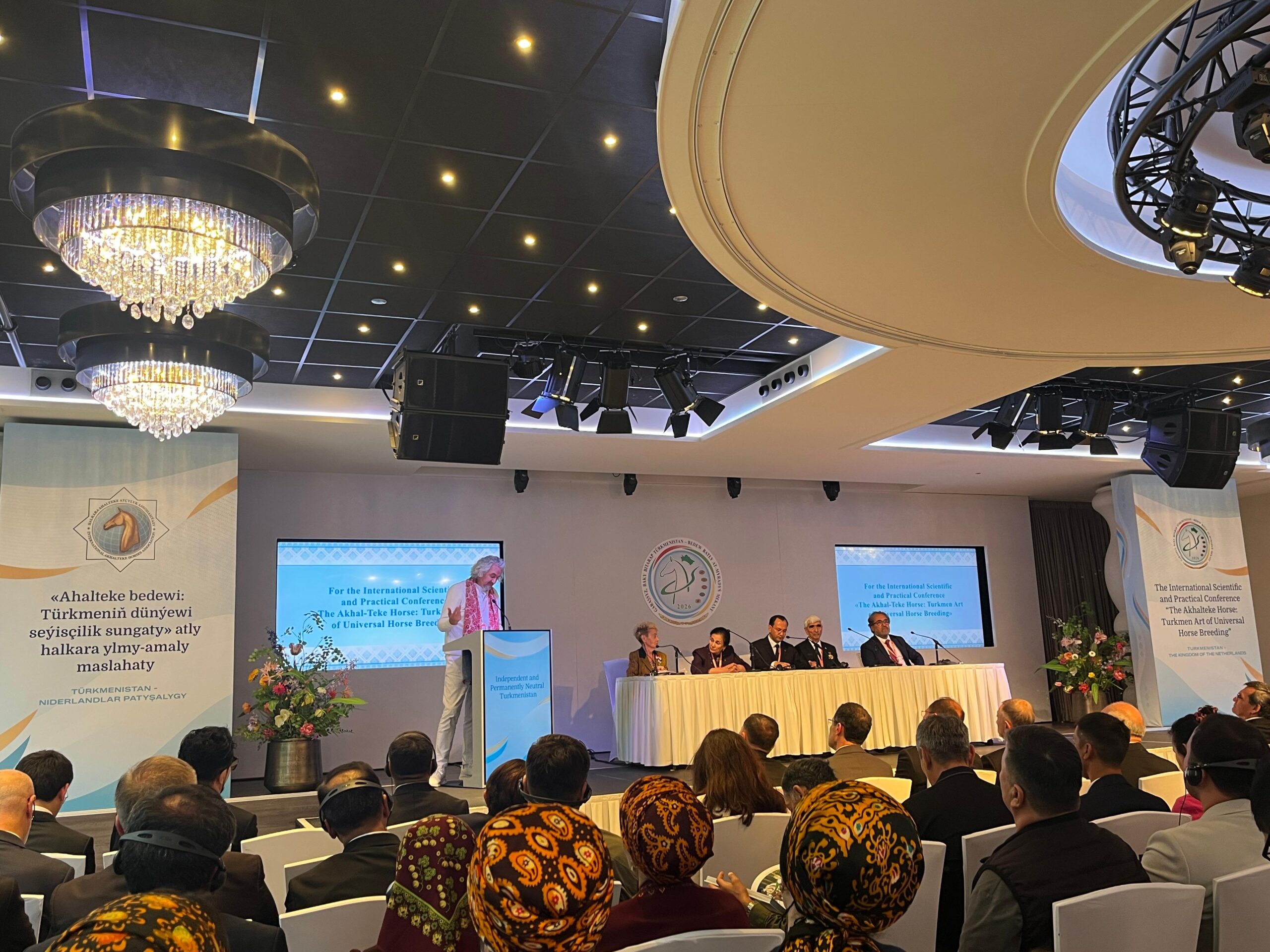
On Saturday, attention shifted fully to the Peelbergen Equestrian Centre, where the main championship programme unfolded in the presence of Gurbanguly Berdimuhamedov, National Leader of the Turkmen people and Chairman of the Halk Maslahaty of Turkmenistan.
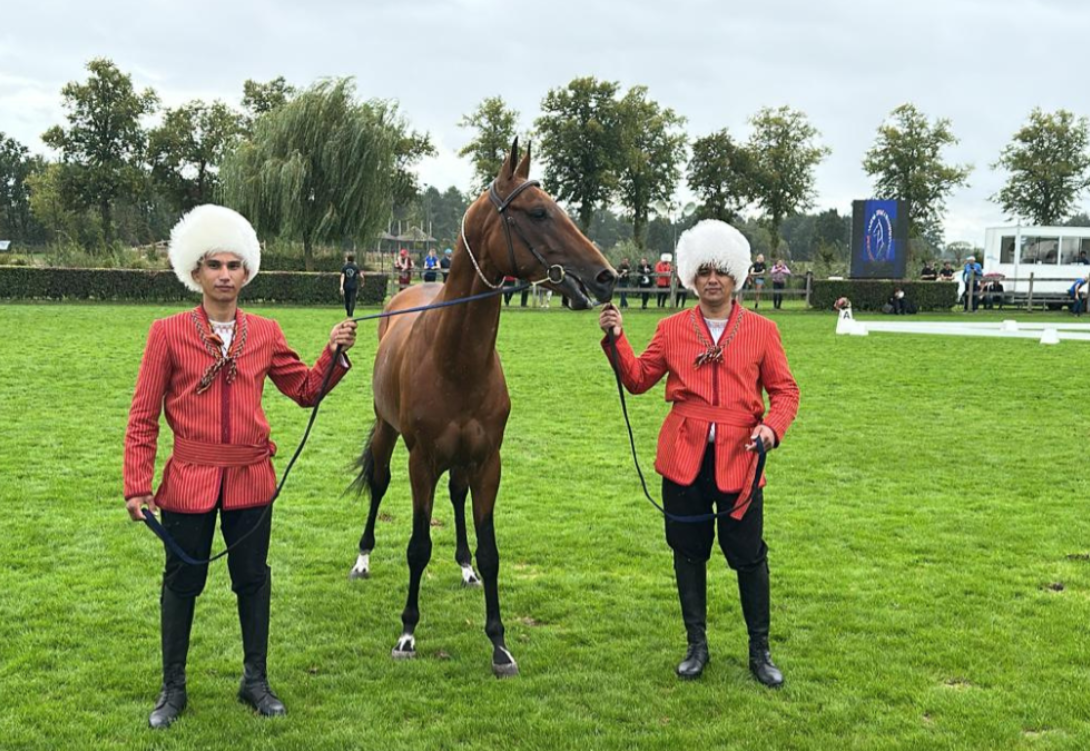
The World Beauty Championship showcased Akhal-Teke horses across different age categories, culminating in the selection of the World Champion. The programme also included show jumping, the “Best Decorated Horse” competition and performances showcasing Turkmenistan’s equestrian traditions.
Alongside the sporting programme, an open meeting of the International Association of Akhal-Teke Horse Breeding brought together breeders and specialists to discuss the preservation and international development of the breed.
Proposals included strengthening cooperation in education and scientific research, exchanging historical information and further promoting the Akhal-Teke internationally. The possibility of organising major international equestrian championships every five years was also raised.
Gurbanguly Berdimuhamedov also announced that the modernised President of Turkmenistan’s Akhal-Teke Equestrian Complex will be inaugurated on 29 September. The upgraded facility will incorporate modern technologies and artificial intelligence, including in the digitalisation of management and production processes.
More than an equestrian competition
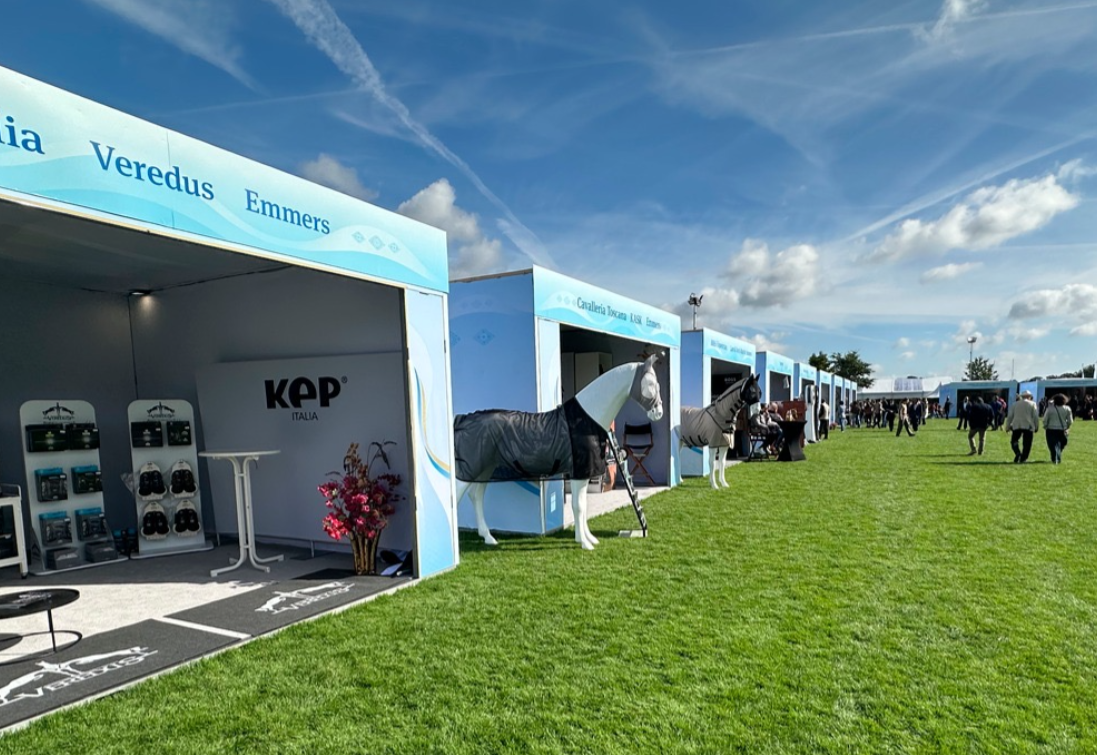
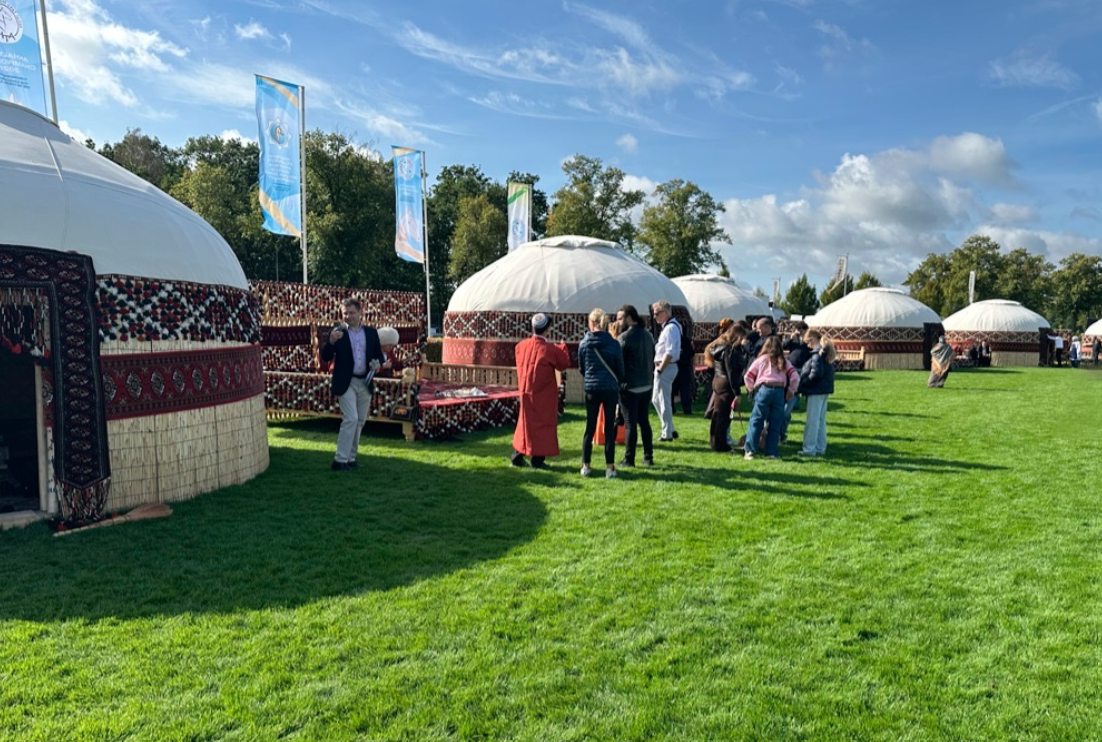
The weekend was not limited to the arena. An international exhibition and fair at Peelbergen brought the wider culture surrounding the Akhal-Teke into the spotlight.
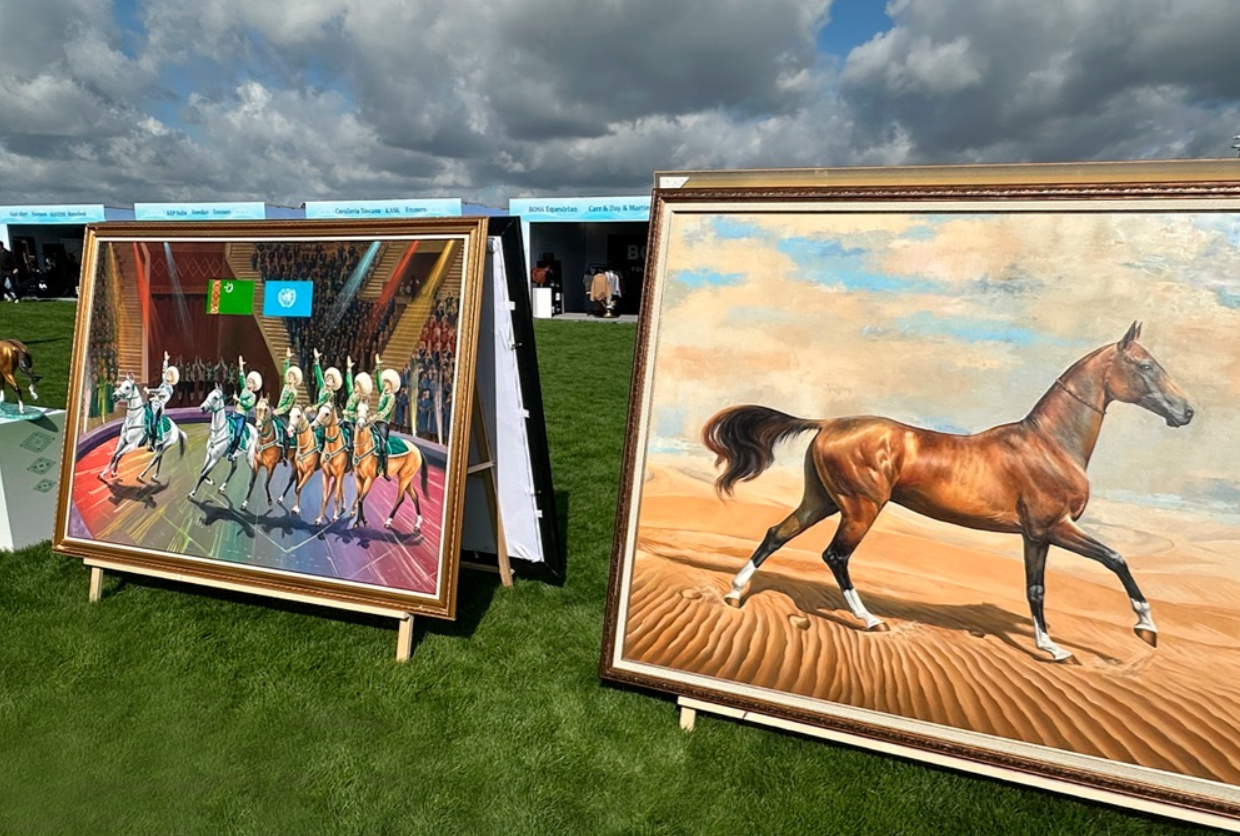
Traditional Turkmen carpets, paintings and other artistic works appeared alongside saddles, riding equipment, equestrian clothing and contemporary technologies for horse care. International equestrian companies and Turkmen organisations presented their work, illustrating how the horse sits at the intersection of heritage, sport, craftsmanship and a modern international industry.
The international character of the gathering was equally significant. The presence of more than 300 guests, including political representatives, diplomats, journalists, European officials, breeders, scientists and cultural figures, transformed the championship into a platform for cultural exchange well beyond the equestrian world.
The championship concluded on Sunday after three days demonstrating why the Akhal-Teke continues to attract attention far beyond Turkmenistan.
For visitors unfamiliar with the breed, the event offered an introduction to an extraordinary horse. For breeders and specialists, it provided an international platform for cooperation and preservation. From a cultural perspective, it showed how a centuries-old tradition can continue to travel across borders.
The Akhal-Teke may be rooted in the landscapes and history of Turkmenistan, but in Peelbergen this weekend, its heritage brought together people and cultures from across the world.