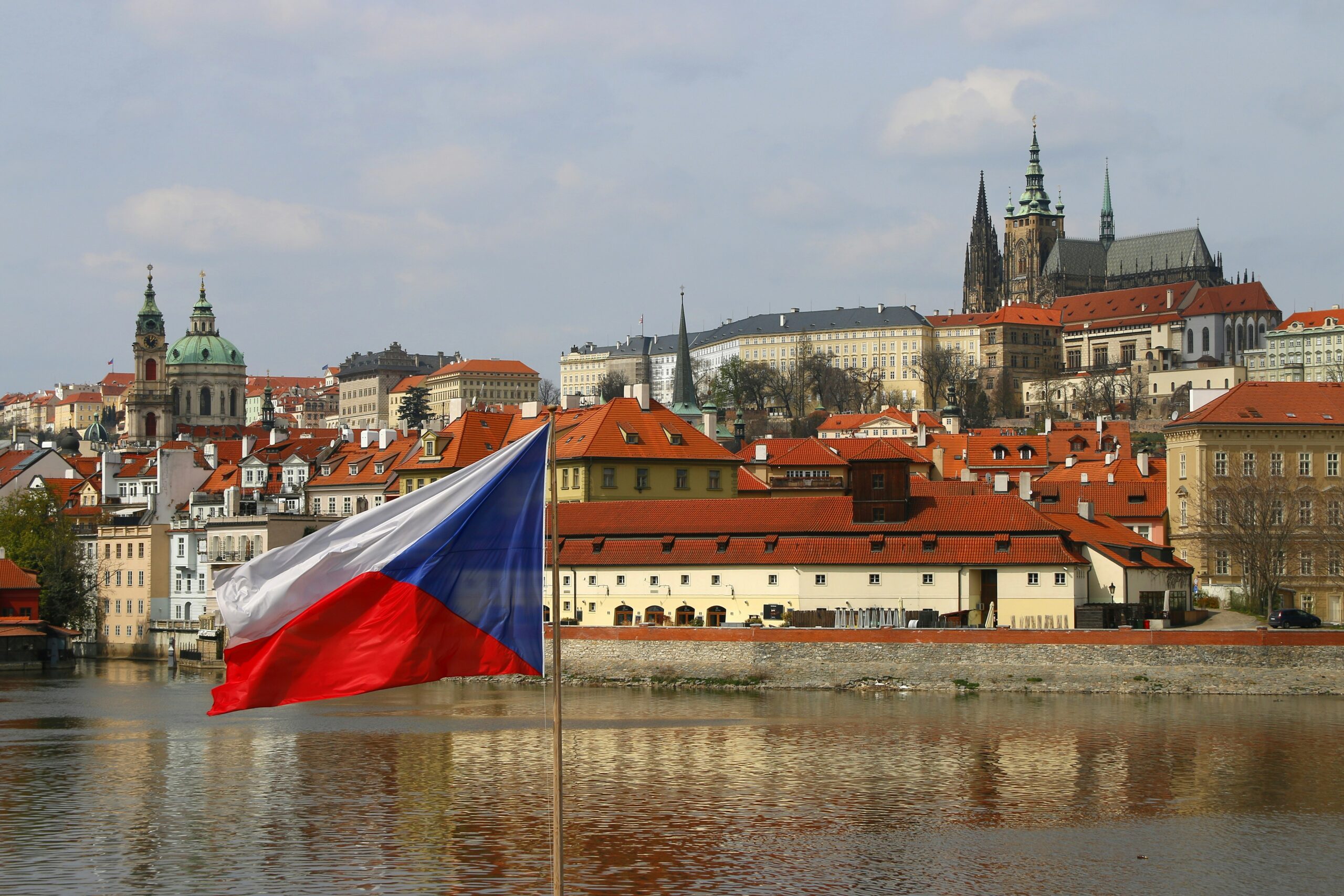



Despite headwinds from the Middle East crisis and fuel costs, Europe remains the world’s most touristed region, and Czechia is its fastest-growing booked destination, enjoying growth at 18% year-on-year, according to new data from Amadeus Travel Intelligence and UN Tourism.
The figures reveal Czechia ahead of Iceland, which sits in second place after 11% growth, followed by Denmark with eight per cent. Czechia is also the most searched-for destination in Central and Eastern Europe and has seen hotel occupancy surge to over 60%.
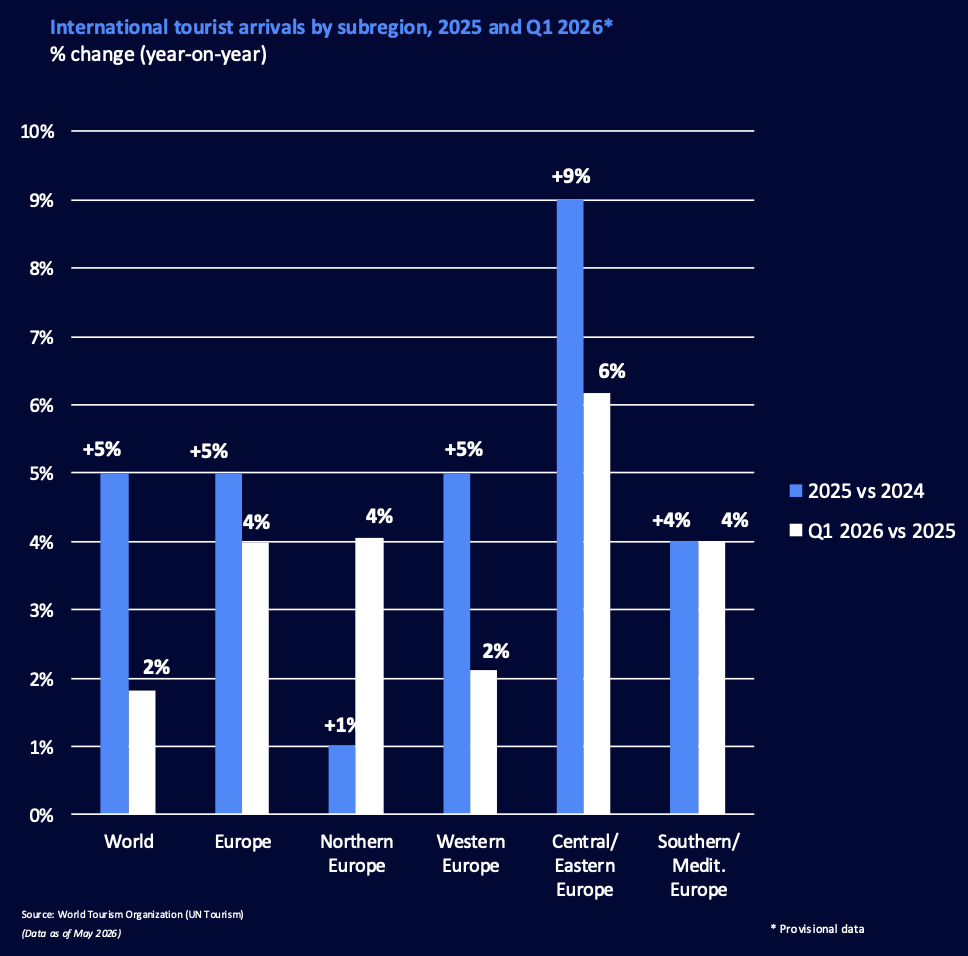
As a whole, Europe welcomed more than 130 million international tourists in the first quarter of 2026, a four percent increase driven in part by tourists turning away from Middle Eastern destinations due to the Israel-US war on Iran. Growth across the region is described as “steady” in the Travel Insights 2026 report. Arrivals went up by four percent in Southern Mediterranean Europe and Northern Europe during the first quarter of 2026. Central and Eastern Europe saw arrivals up six percent compared to the same period in 2025, while Western Europe recorded 2% growth.
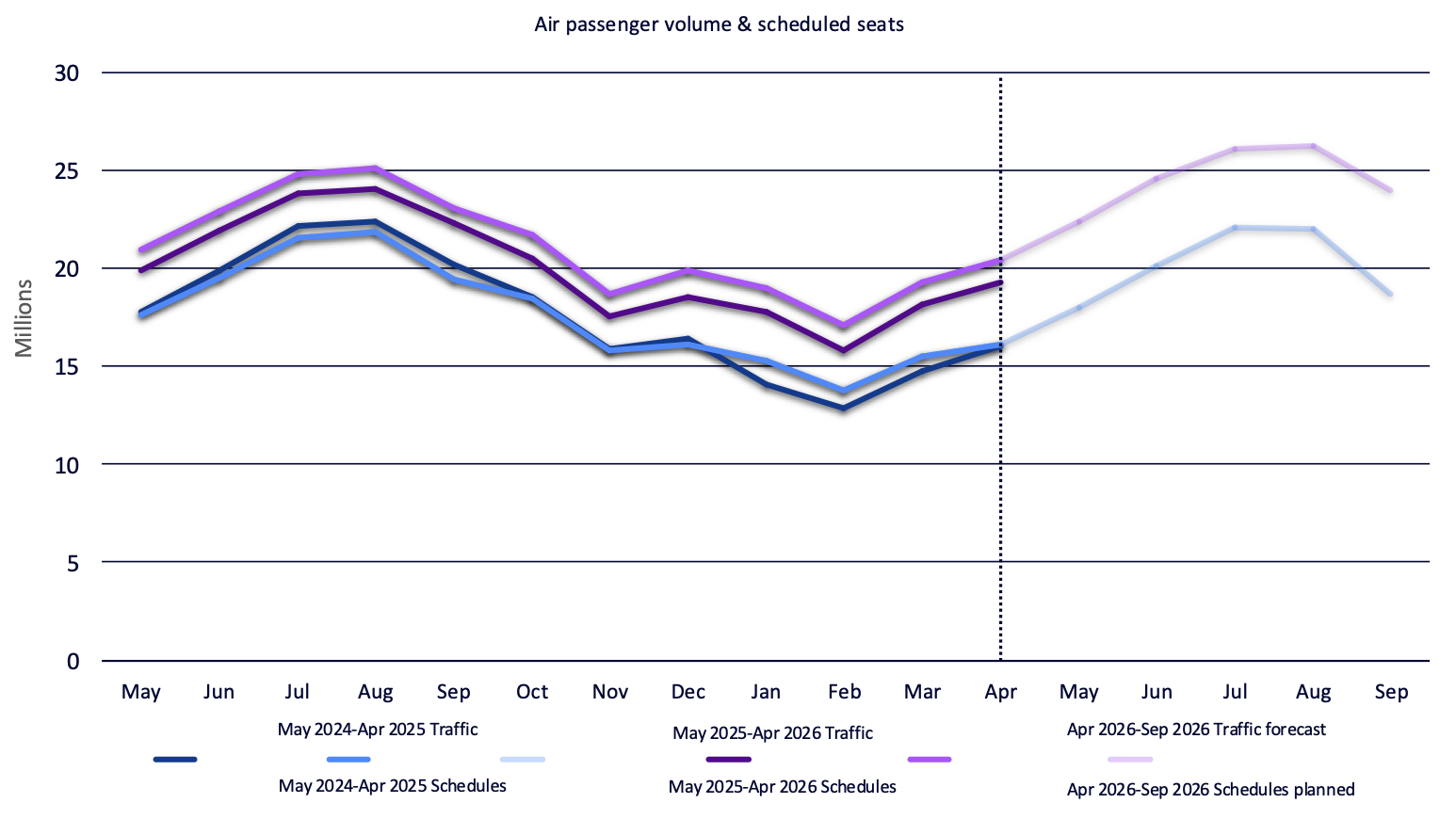
The United States, Germany, and Spain dominated air passenger volume and scheduled seats, in addition to strong year-on-year growth from Japanese (19%), Danish (11%), and Egyptian (eight percent) source markets.
Although Spain remains in high demand, as the region’s most searched-for and booked destination, the growth data reflects an ongoing trend for so-called “coolcations” away from southern Europe’s traditional sunshine spots, as well as travellers’ increasing appetite for breaks off the beaten track, and outside of high season.
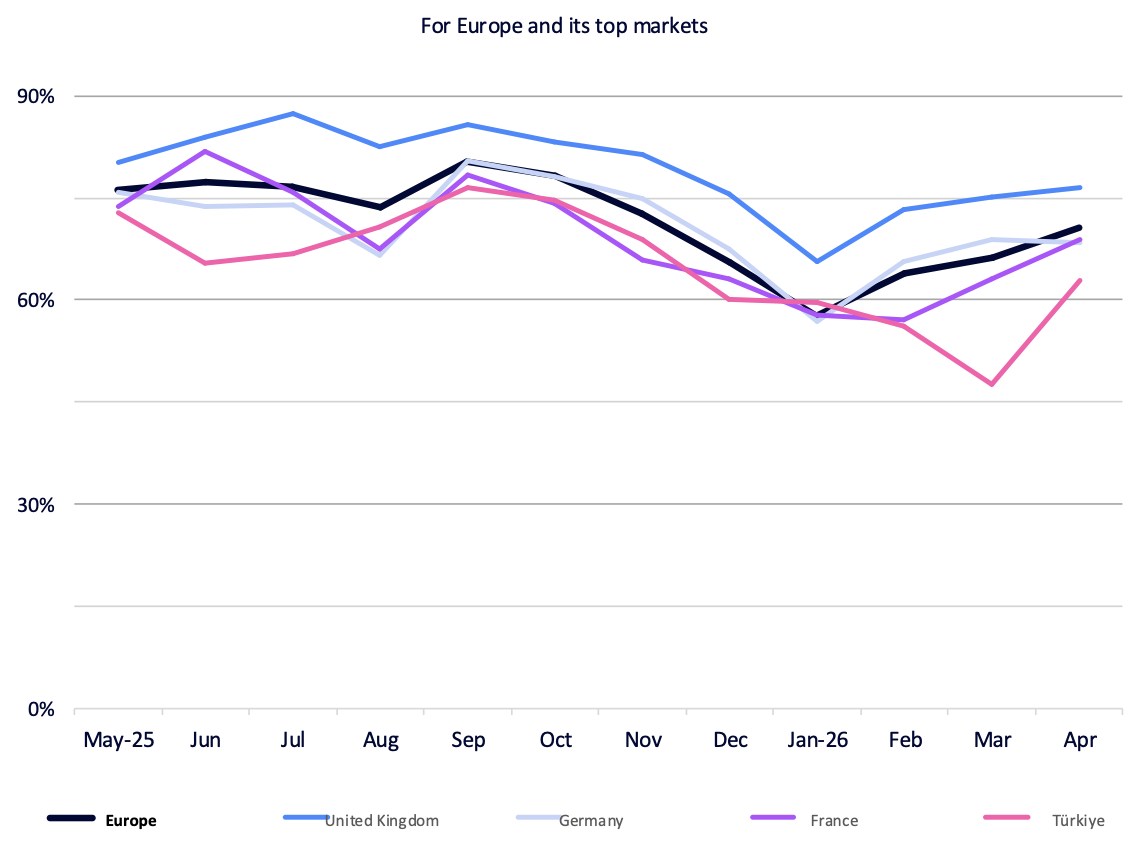
In line with those phenomena, hotel occupancy peaked at 80 per cent in September 2025. The UK and Germany came fourth and fifth for most booked, and the UK was the second most searched-for destination in Europe. Switzerland (+36%), Sweden (+36%), Denmark (+34%), Ireland (+33%), Belgium (+32%) and Norway (+31%) all saw search growth over 30%. Outside the region, Uzbekistan and Tajikistan saw searches up 64%.
Still, arrivals to Southern and Mediterranean Europe over the region’s traditional summer season across July and August are reported to hit 70 million in air passenger volume and scheduled airline seats, thanks to the sub-region’s expansion of air connectivity, with approximately 1,100 new flight routes added to timetables in the past year. Over 200 of those connections are to Germany, France, Italy, and Spain, and new connections from Slovakia to Spain, Ethiopia to Portugal, and China to Greece promise to keep southern Mediterranean destinations at the forefront of European travel.