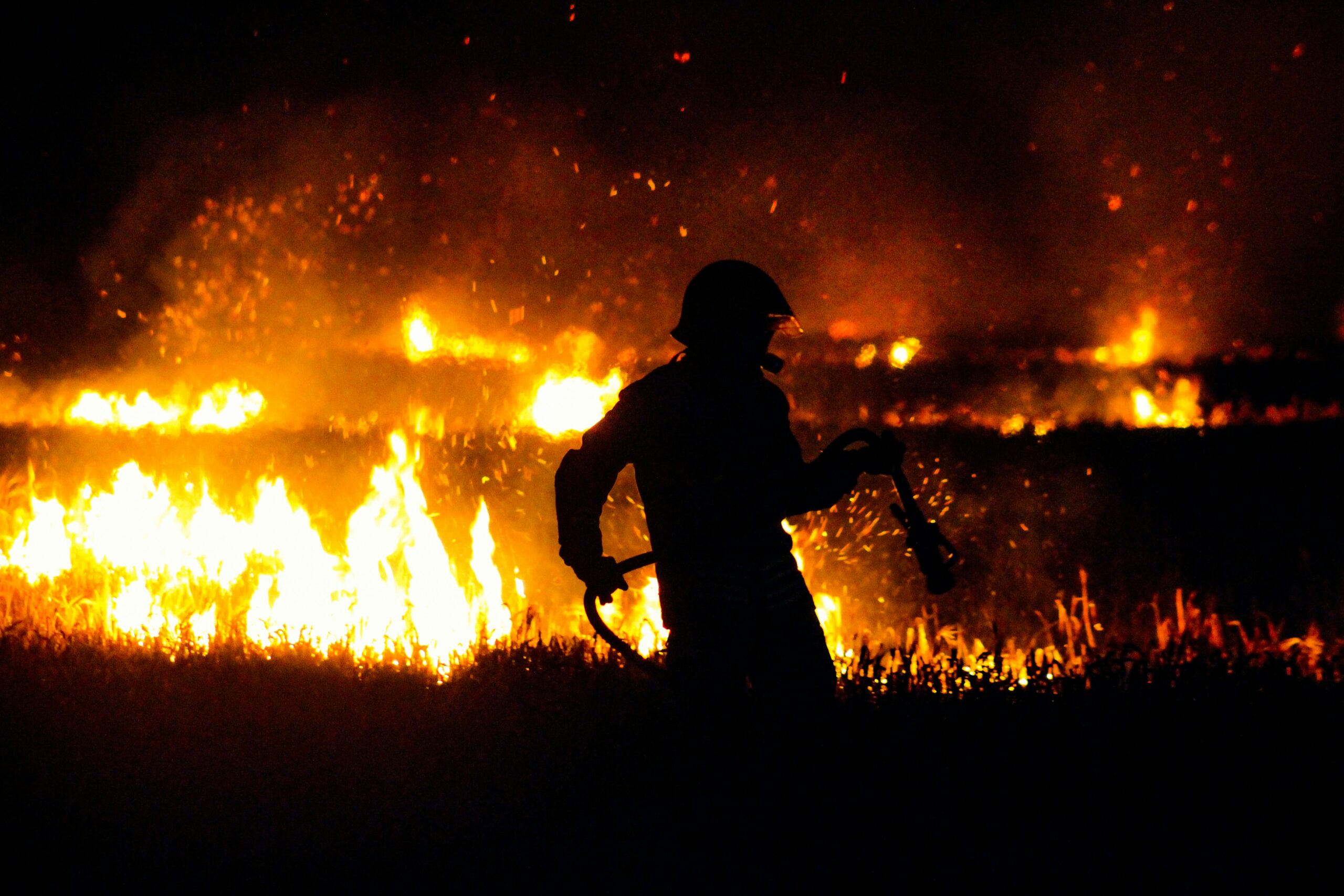



As a new heatwave is expected to strike western Europe, France and Spain continue to combat major wildfires. While the Gironde and Landes wildfires near the city of Bordeaux in France have forced 260,000 people to flee their homes, a blaze near Madrid has forced 116,000 inhabitants to evacuate. After an intense weekend, this is how the situation is looking on Monday, 27 July 2026.
France
Several major wildfires have been hitting France since the start of June, and some parts of the country are bracing themselves for a fourth heatwave. All eyes are on the French southwest at the time of writing, as two distinct yet nearby areas in the region are facing wildfires of historical dimensions.
The largest blaze started on 22 July 2026 in the town of Saumos in the Gironde department. Since then, approximately 42,000 hectares are thought to have been destroyed completely or partially by the flames, triggering the evacuation of 220,000 people across 23 towns, including tourists staying at local holiday homes, hotels, and camping grounds. Some 240 homes have burned down entirely, and 2,500 firefighters are battling the flames, 84 of whom were injured during the task.
Wildfires dramatic aerial footage of the Gironde blaze near Bordeaux Stay safe 🇫🇷 pic.twitter.com/oZLjjNPyPj
— France Safety Travel (@francesafetytra) July 26, 2026
On Monday 27 July 2026, the wildfire which took off in Saumos still isn’t under control. With a new heatwave expected to hit the region from Tuesday 28 July onwards, firefighters are doing everything they can to put out the flames, a task that is being made particularly difficult due to the fact that the fire evolved into a so-called ‘pyrocumulonimbus’. The phenomenon, unseen in France until now, means the blaze turned into a thunderstorm fuelled by its own winds and lightning.
A second wildfire started in the town of Biscarosse in the nearby Landes department on 23 July. On the evening of 26 July 2026, 3,600 hectares had been burned down, and the fire still wasn’t fixed. While some 5,000 people were able to return to their homes, the situation remains unstable.
🔴FRANCE 🇫🇷| The major fire in #Gironde has ravaged a record of 12,500 ha since Wednesday, with 44,000 people evacuated. In #LesLandes, the #Biscarrosse fires remained active on Saturday, with 2,600 ha destroyed and 25,000 evacuations. Firefighters and resources remain mobilized. pic.twitter.com/FSjuKCdXPB
— Nanana365 (@nanana365media) July 25, 2026
A third fire in the Var has meanwhile burned down 4,500 hectares of vegetation, mobilising some 1,000 firefighters and leading to the evacuation of people in the towns of Barjols, Châteauvert, and Correns. As the wind is making it difficult to contain the situation at the time of writing, although the evening of Monday 27 July might bring rain.
Given the large number of wildfires that have been hitting France since the start of the summer, French president Emmanuel Macron has organised a crisis meeting on Monday, 27 July.
As far as travellers are concerned, the prefect of the Gironde, Sophie Brocas, is advising all those who were planning to travel to the popular region over the coming days (or even weeks) to stay home. She further added that those who were already on-site are invited to look for alternatives, especially since the situation may worsen yet again as of 28 July.
Fransa’nın güneybatısındaki yangın kontrol altına alınamıyor: Bordeaux kentinin tamamen tahliye edilmesi gündemde
— The Cradle Turkiye (@cradleturkiye) July 26, 2026
🔴 Fransa'nın güneybatısındaki Gironde ve Landes bölgelerinde günlerdir devam eden yangınlar nedeniyle tahliye edilenlerin sayısı 220 bine yükseldi
🔴 42 bin… pic.twitter.com/noIb7petTA
Although travellers could opt to travel to one of the nearby towns or departments, it is worth noting that the wildfires have caused a severe deterioration of the air quality in at least four departments: Gironde, Landes, Dordogne, and Lot-et-Garonne. Masks are currently being distributed in order to protect inhabitants, especially the elderly, those who are struggling with health issues, and children.
Spain
In its turn, Spain has been combating its share of wildfires too over the course of the summer. Provisional data show that over 170,000 hectares of forest land have been affected by wildfires in Spain since the beginning of 2026, compared to just 29,000 in 2025.
At the moment of writing, some 76,000 people have been evacuated across Spain while 30,000 others are confined to their homes, as firefighters are battling the flames throughout the country, with the biggest blazes currently located near Madrid, Ávila, and Valencia. The fire in Ávila burned down 25,000 hectares ravagés and is said to be the biggest one in Spain in recent history.
Wildfires in Spain are completely out of control. More than 300.000 people across Spain and France have been evacuated.
— France Safety Travel (@francesafetytra) July 26, 2026
Heroic firefighters are fighting day and night to prevent it from spreading further.
Thank you for your immense service. pic.twitter.com/EmH4t5JHq8
“What we are living through is not a series of isolated incidents. It is … the most painful manifestation of a climate emergency that is making … wildfires more voracious and heatwaves more frequent, and, as a result, our land more vulnerable. It is no longer an exception. It is the rule,” Spanish prime minister Pedro Sánchez said at a climate conference in Madrid.
While Spanish authorities said the fire near Madrid slowed down overnight, the blaze currently remains “active and uncontrolled”. While some people have been allowed to return to their homes, citizens and visitors alike are urged to continue exercising extreme caution.
🇪🇸Spain's massive wildfires have forced 87,000 evacuations near Madrid.
— Info Room (@InfoR00M) July 25, 2026
– Extreme 39°C heat & high winds created uncontrollable walls of fire, forcing 3,000 emergency responders to retreat. The situation remains critical. pic.twitter.com/FEN6xcbMaU
With extreme temperatures being announced over the coming days, it is unclear how the wildfires across Spain and France will evolve. However, 2026 is already likely to go into history as a record year.
“Last year, one million hectares burned during the summer and so we are expecting to face another historic, sad record because the season has started earlier in the year,” the EU commissioner for crisis management, Hadja Lahbib, told the BBC, specifying it was likely 2026’s damage from wildfires would exceed previous records.