

A new long-distance hiking route is offering travellers the chance to cross Europe on foot, connecting Poland’s Baltic coast with the Adriatic Sea in Italy through a nearly 3,500-kilometre journey across six countries.
The Wolf Trail runs through Poland, Germany, Switzerland, Austria, Italy and Slovenia, combining existing European long-distance paths into one continuous route. Designed by outdoor brand Jack Wolfskin, the trail is aimed at both experienced thru-hikers and travellers looking to complete individual sections.
@jackwolfskin Wolf Trail 🇵🇱🇩🇪🇨🇭🇦🇹🇸🇮🇮🇹 Europe's newest thru-hiking trail | 3493 km ~ 2170 miles | 4-6 months | info 👇 The Wolf Trail is a new thru-hike that goes coast-to-coast from northern Poland to Trieste on the Adriatic Sea in Italy. It stitches together existing premier routes including the E9 (Coastal Path), E1, Nord–Süd Route, and the Via Alpina into one seamless odyssey. It crosses six countries through forests, countryside, mountains, and the Mediterranean. We're very stoked to launch this new thru-hiking trail 🤩 If you don't have the time to hike the full Wolf Trail, no worries, you can also very easily section-hike it 🙏 All stages 👇 1️⃣ Baltic Start, 428 km | 266 mi 2️⃣ Rivers & Plains, 543 km | 337.5 mi 3️⃣ The Green Heart, 487 km | 302 mi 4️⃣ Forests & Wine, 583 km | 362 mi 5️⃣ High Watch, 581 km | 361 mi 6️⃣ Alpine Gateway, 394 km | 245 mi 7️⃣ Alpine Crossing, 591 km | 367 mi From the end of April, you can follow these amazing hikers on their journey, setting off in Poland and ending in Trieste: 🔹 @laurenroerick 🔸 @timothyvslarsen 🔹 @elinasborne 🔸 @marc_is_walking More info, the GPX, and everything else coming soon. Make sure you follow @jackwolfskin and @_thru_hiking for the latest updates! See you on the trails! 💚 📍 Wolf Trail 🏃♂️ Thru-hike 🥾 3493 km / 2170 miles 📅 4 to 6 months ⛰️ Hills, urban, forest, mountains, countryside . . . . #thruhiking #wolftrail #thruhike ♬ Wander On – Jeddy Knox
Covering approximately 3,493 kilometres, the full route involves around 78,400 metres of elevation gain, roughly equivalent to climbing Mount Everest nine times from sea level. Completing the entire trail is expected to take between four and six months.
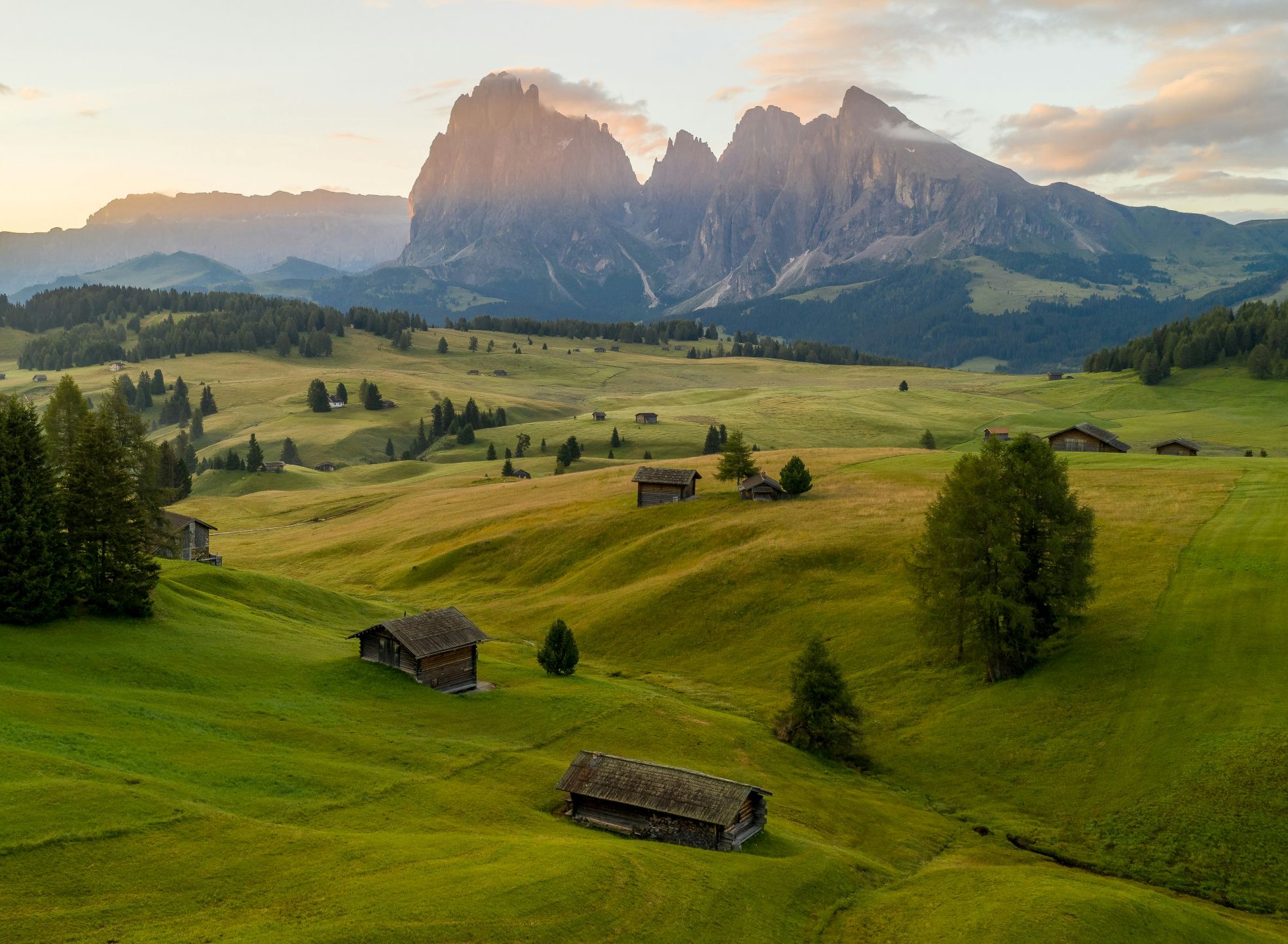
The journey begins in Hel, on Poland’s Baltic coast, with a 430-kilometre section to Świnoujście. Hikers pass sandy beaches, coastal forests and landscapes including Słowiński National Park before continuing westwards into Germany.
From Baltic beaches to Alpine passes
The route becomes progressively more demanding as it heads south. After crossing the plains and forests of northern Germany, hikers encounter the Lüneburg Heath, Rothaar Mountains and Palatinate wine region before reaching the Black Forest and Lake Constance.
From there, the Wolf Trail enters Alpine terrain, passing through the Allgäu Alps before continuing towards some of the most dramatic landscapes of the journey. The final 558-kilometre section between Oberstdorf and Trieste crosses the Dolomites and Julian Alps, with mountain passes reaching between 2,500 and 3,000 metres.
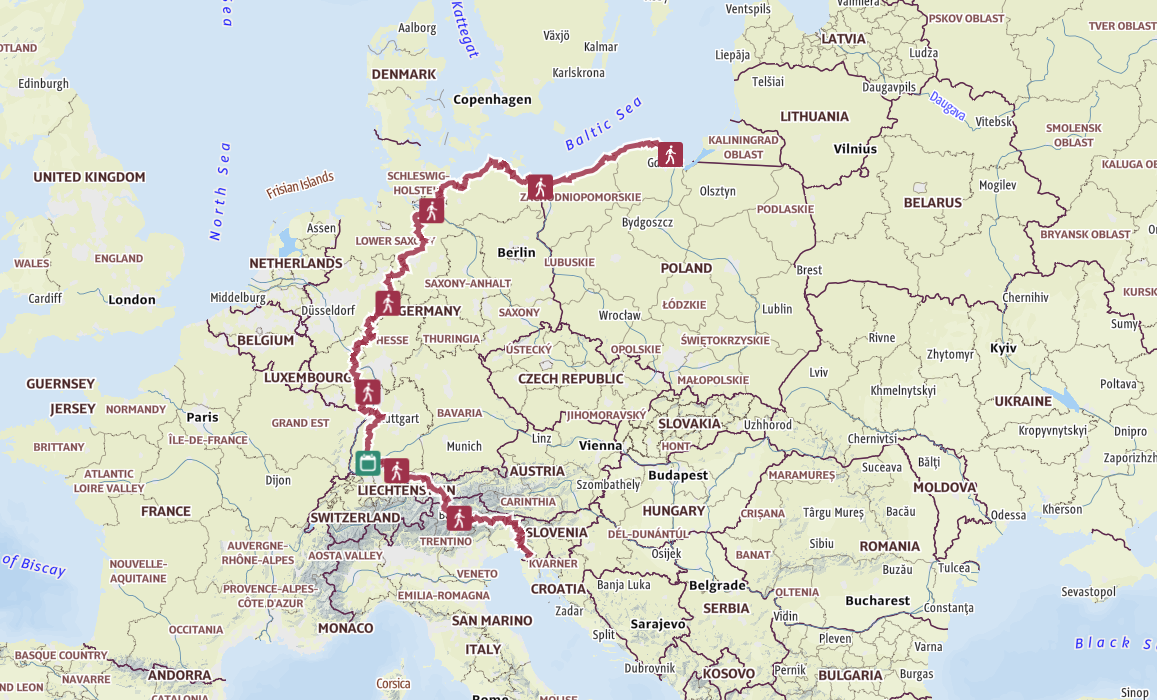
Among the highlights are the UNESCO-listed Dolomites and Triglav National Park. The route eventually descends towards Trieste, where the journey finishes on the Adriatic coast.
Rather than creating thousands of kilometres of entirely new paths, the Wolf Trail connects established routes, including sections of the E1 and E9 European long-distance paths and the Via Alpina.
The complete journey has been divided into seven sections ranging from 373 to 573 kilometres. They can be tackled independently, allowing hikers without four to six months available to experience parts of the route over several weeks. Numerous access points also make shorter hikes possible.
Accommodation instead of wild camping
One of the challenges of creating a continuous route across Europe is the variation in camping regulations between countries and regions. Instead of relying on wild camping, the Wolf Trail has been planned around existing infrastructure, with hikers able to use approved trekking camps, mountain huts and accommodation in towns and villages along the way.
This also fits the concept of thru-hiking, where travellers follow a long, continuous route while regularly stopping in communities to obtain food and other supplies.
Canadian long-distance backpacker Lauren Roerick has tested the route to assess its practicality and navigation. However, anyone attempting the complete journey will still need to plan carefully around the seasons.
The northern sections provide a relatively gentle introduction, but conditions become considerably more demanding towards the Alps. Given the duration of the full hike, timing is particularly important, with Alpine sections potentially exposed to severe weather and snow between autumn and early spring.
Beyond the physical challenge, the route offers a slow-travel journey through contrasting European landscapes and cultures, from Baltic fishing communities and German wine regions to Alpine villages and the multicultural port city of Trieste.