


Brussels Airport has strengthened its fire service with four new specialised crash tenders and a new training simulator as part of an almost €6 million investment aimed at enhancing safety and emergency response capabilities.
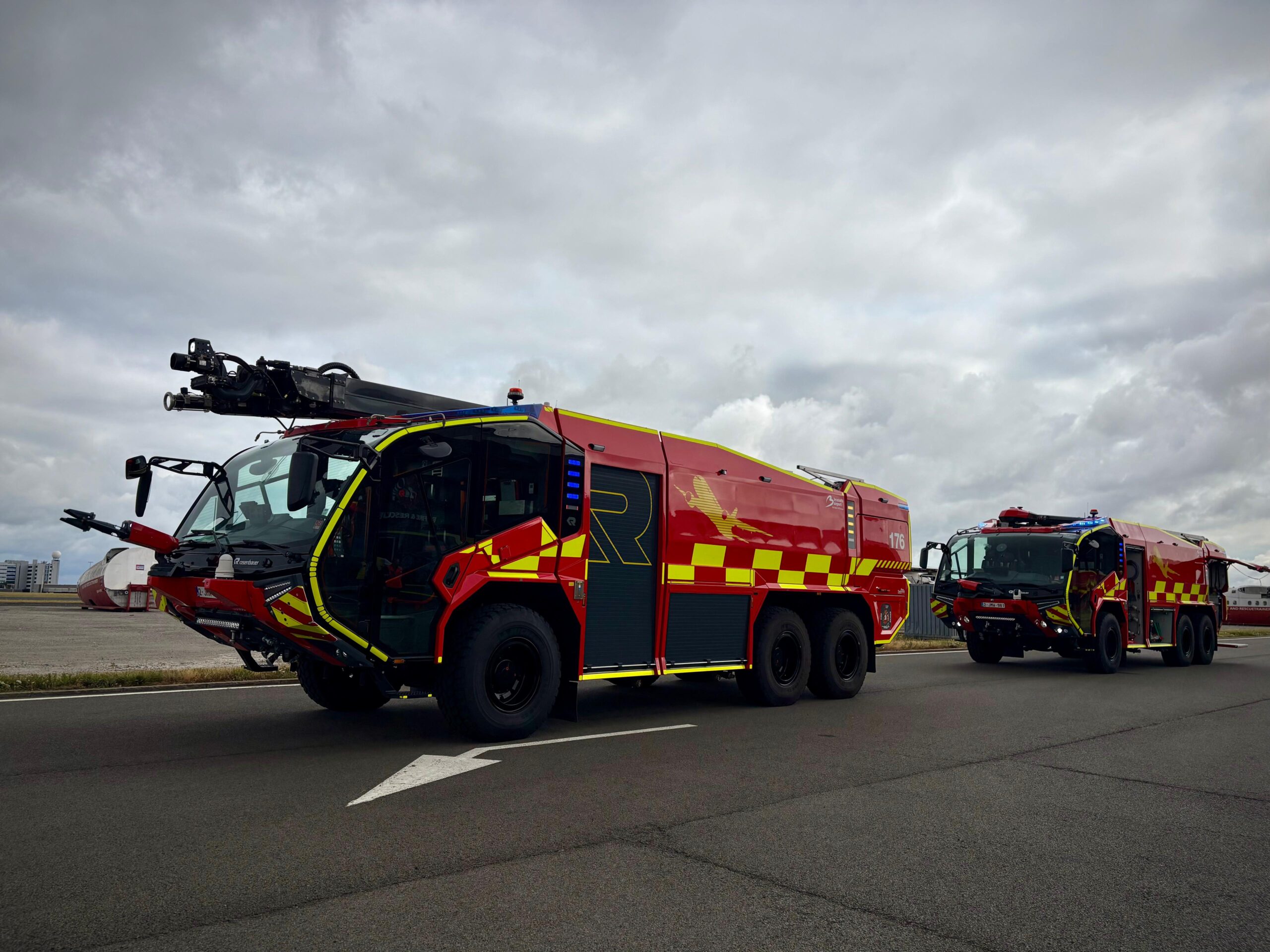
The four new Rosenbauer crash tenders are now operational and have joined the airport’s in-house fire service fleet. They replace five older units that had reached the end of their operational lifespan and are specifically designed for rapid intervention during aircraft emergencies on the airfield.
Weighing 39 tonnes, the new vehicles can reach speeds of up to 115 km/h, allowing firefighters to respond quickly across the airport site. Each crash tender carries 12,500 litres of water, 1,500 litres of extinguishing foam and 225 kilograms of dry powder. Their roof-mounted water cannons can discharge up to 5,200 litres of water per minute, providing firefighters with the capacity needed to tackle large-scale aircraft fires. One of the new vehicles is also equipped with a steel-piercing nozzle, which allows extinguishing agents to be injected directly into an aircraft cabin or cargo hold to fight fires more effectively.
The modernisation of the fleet is part of Brussels Airport’s ongoing efforts to ensure that its emergency services continue to meet the highest safety requirements. The airport fire service operates 24/7 and is responsible for responding to aircraft-related incidents and other emergencies within the airport environment.
Alongside the new vehicles, Brussels Airport has also invested in a dedicated training simulator. The simulator recreates realistic emergency situations, enabling firefighters to practise their response procedures in a controlled environment and further develop their skills without affecting airport operations.
The investment in new equipment and training infrastructure aims to support the airport’s fire service in maintaining a high level of preparedness and ensuring efficient responses in the event of an emergency. This forms part of Brussels Airport’s broader efforts to continuously enhance safety across its operations.
The airport is also upgrading its security screening systems with next-generation technology, including body scanners for passengers and CT scanners for hand luggage. Set to be introduced from 2028, the new equipment will allow travellers to keep liquids and electronic devices in their bags during screening, while enhancing security efficiency and improving passenger flow.