



A survey reveals that 82% of Europeans are planning to travel this spring and summer, the highest figure recorded since 2020, yet nearly 90% intend to stay within the continent, a clear sign of how rising costs and geopolitical tensions are reshaping travel habits and weighing down the aviation sector.
Sammy, a Belgian father, has decided to skip his family’s annual trip to Dubai this spring in favour of a holiday in Spain. Sabrina, a retail worker, has had her trip to Tel Aviv cancelled twice and cannot afford an alternative. Greta, who lives in Hamburg, has also given up on attending her nephew’s graduation in the United States due to soaring airfares.
According to the European Travel Commission’s latest report, Monitoring Sentiment for Intra-European Travel (Wave 24), travel intentions for April to September 2026 have risen by 10% compared to last year, confirming a strong rebound.
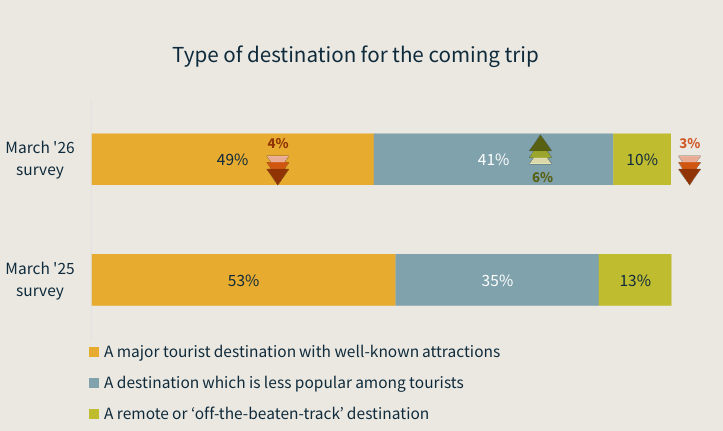
The strongest growth comes from younger age groups, with rises of 21% among 18–24-year-olds and 16% among 25–34-year-olds. This season, intra-European travel dominates, showing a net preference for affordability and safety.
However, the way in which Europeans travel has changed. Trips are shorter, fewer and more selective. Stays of four to six days now account for 38% (an increase of 3% from 2025), while longer stays of seven to twelve nights have declined to 37%.
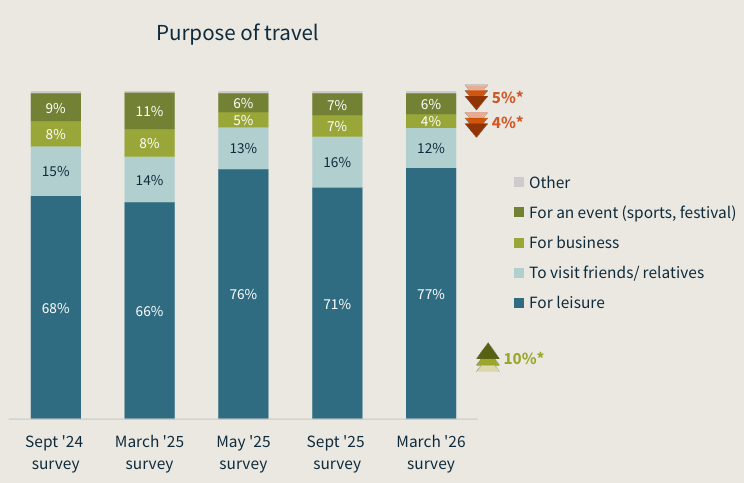
Budgets follow this trend. The proportion of travellers budgeting €1,000 or less per trip has increased by 4%, while the proportion planning to spend €1,500 or more has dropped by 9%. Meanwhile, 39% of Europeans are planning just one trip during this period, which is an increase of 7% compared to last year.
Rising costs and geopolitical uncertainty are key drivers of this change. Safety is now the leading factor when choosing a destination (21%), followed by weather (15%) and deals (14%). One in five Europeans is affected by costs; concerns about tensions in the Middle East have increased by 9% to 18%.
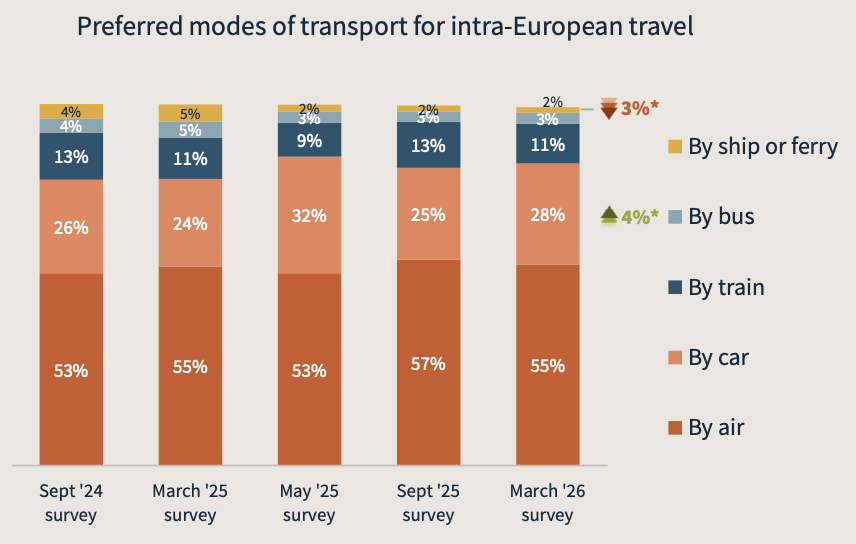
Despite these constraints, travellers are reluctant to compromise on comfort. Spending on accommodation has only declined slightly, suggesting that many people would rather take shorter trips than stay in lower-quality accommodation.
Southern and Mediterranean Europe are the main beneficiaries. Spain is the most popular destination, accounting for 14% of intended visits, followed by Italy (11%), France (8%), Greece (6%), and Portugal (6%). Overall, the region attracts 60% of travellers. Sammy is among those travellers, having planned three separate stays across Spain instead of one long-haul holiday.
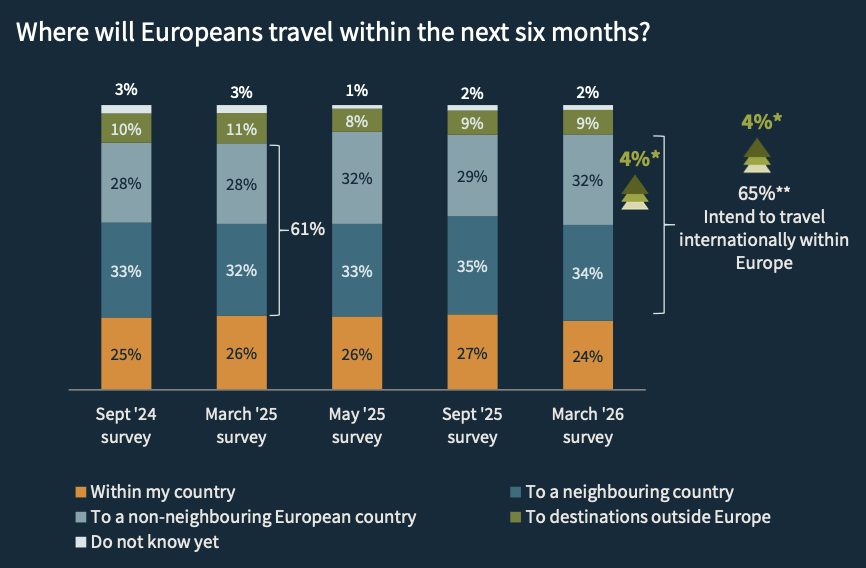
There is also a growing preference for cross-border travel within Europe: 65% of travellers are planning such trips. Interest in more distant European destinations is also rising. At the same time, travellers are simplifying their itineraries by favouring a single base from which to explore nearby cities, rather than combining multiple destinations.
As Miguel Sanz, President of the European Travel Commission, notes, Europeans remain “highly motivated to travel, even in a more complex global environment”, but are adopting “a more selective, value-driven approach”, with “shorter stays, flexible plans, and carefully managed budgets”.
Travellers like Sabrina have been unable to secure an alternative destination due to multiple cancellations and rising prices, so they ultimately stayed home. Greta will book another trip in Europe, but will miss an important family event.
Last week, Apostolos Tzitzikostas, the European Commissioner for Sustainable Transport and Tourism, said that Europe, which imports around 30% of its jet fuel, could release emergency stocks “only if necessary”.
Ultimately, Europeans are adapting to the situation and recalibrating their expectations. The desire to travel remains strong, particularly among the younger generation, with travel intent surging by 21%. The travel rebound is, however, undeniable, albeit shaped by practical limits.