


Kazakhstan and the European Union are approaching the final phase of negotiations on visa facilitation, with a potential agreement expected within the next year, according to Kazakhstan’s Foreign Minister Yermek Kosherbayev.
Speaking on 18 March on the sidelines of the Mazhilis, Kosherbayev said discussions with the EU, including on readmission arrangements, have entered what he described as the “final stretch”. “Negotiations have not stopped; they are underway, including on readmission. We hope that we will be able to reach a final agreement within a year. In principle, we are already approaching the finish line,” he stated.
Final stretch after months of negotiations
The latest round of negotiations on the draft Visa Facilitation and Readmission agreements took place in Astana on 3 March, marking another step forward in a process that has been ongoing for several years.
Kosherbayev emphasised that progress reflects a balanced bilateral effort. “Any negotiations are always a question not of who will win, but of how the parties can reach mutual agreement and a concept,” he added, underlining the cooperative nature of the talks.
Visa facilitation agreements typically aim to simplify procedures for travellers, including reduced fees, shorter processing times, and fewer administrative requirements, particularly for students, business travellers and professionals.
Building on growing EU–Kazakhstan ties
The near-finalisation of visa facilitation talks builds on a broader strengthening of relations between Kazakhstan and the EU. As reported by Travel Tomorrow, discussions on easing visa procedures gained momentum during the 22nd Kazakhstan–EU Cooperation Council in Brussels in December 2025, marking a decade since the Enhanced Partnership and Cooperation Agreement (EPCA) was signed.
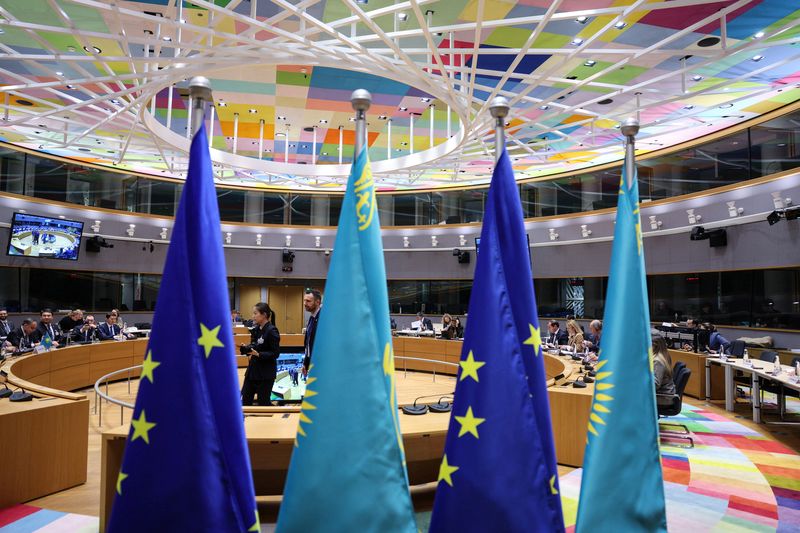
European Union and Kazakhstan held the 22nd meeting of their Cooperation Council in Brussels, chaired by Kazakhstan’s Foreign Minister Yermek Kosherbayev, with the EU delegation led by High Representative Kaja Kallas.
— EU in Kazakhstan (@EUinKazakhstan) December 2, 2025
🔗Read more https://t.co/eXnWdjDMUp pic.twitter.com/TaEVeZ0aUO
At the time, both sides highlighted the importance of expanding people-to-people contacts, with improved visa pathways seen as a key tool to enhance mobility, academic exchange, and professional collaboration. The EU remains Kazakhstan’s largest trading and investment partner, with bilateral trade reaching around $50 billion in 2024 and more than 4,000 European-linked companies operating in the country.
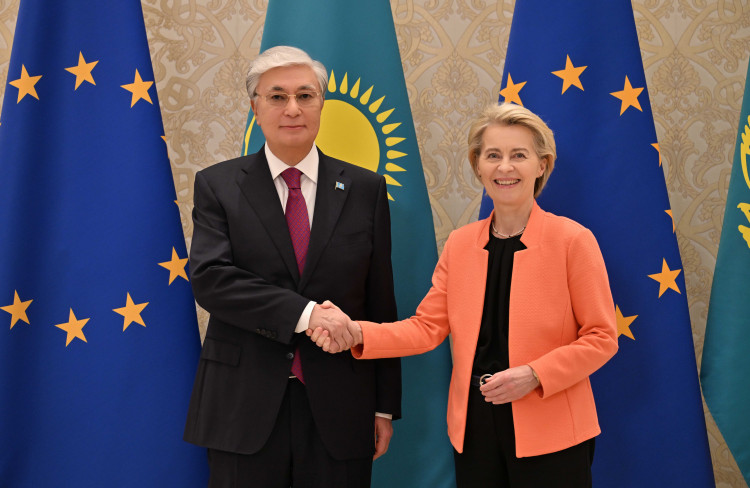
Momentum had already been building earlier in 2025. At the Central Asia–EU Summit in Samarkand in April 2025, Kazakh President Kassym-Jomart Tokayev and European Commission President Ursula von der Leyen identified visa facilitation as a priority alongside transport connectivity, particularly the development of the Trans-Caspian International Transport Route, also known as the Middle Corridor.
Readmission agreements and migration cooperation
Alongside visa facilitation, negotiations also include readmission agreements, which establish procedures for returning individuals who do not meet entry or residence requirements.
Kazakhstan has continued to advance this aspect of cooperation through bilateral agreements. On 18 March, President Tokayev signed a law ratifying a readmission and transit agreement with Austria, creating a legal framework for addressing irregular migration.
The agreement sets out procedures for identifying and returning individuals residing illegally, as well as rules on travel documents, transit operations, and data protection. It also defines responsibilities for both parties, including cost-sharing mechanisms and the roles of national authorities. In Kazakhstan, implementation will fall under the Ministry of Internal Affairs, while in Austria, it will be overseen by the Federal Office for Immigration and Asylum.
Boost for travel, tourism and exchange
If concluded, the EU–Kazakhstan visa facilitation agreement is expected to significantly ease travel for Kazakh citizens to Europe, supporting tourism flows, business links and cultural exchange.
Kazakhstan has already taken steps to liberalise its own visa regime, introducing visa-free access for citizens of dozens of countries, including EU member states, in a bid to attract tourism and investment.
For the EU, facilitating mobility with Kazakhstan aligns with broader strategic interests in Central Asia, including strengthening economic ties, securing supply chains, and fostering closer cooperation in areas such as energy, transport, and digital transformation.