


A Notice to Airmen (NOTAM) issued by Pakistan’s airport authorities has triggered debate after being interpreted by some outlets as signalling a partial airspace closure. The Pakistan Airports Authority (PAA) disputed that reading, maintaining that “the airspace remains fully open, safe, and completely available for all civil aviation traffic”.
The advisory specifies that “selected ATS route segments in the Karachi and Lahore FIRs are unavailable from 3–31 March 2026, daily from 9:00 am to 3:00 pm PKT (4:00 am–10:00 am UTC), due to operational reasons.”
Pakistan Airports Authority – Clarification on Recent NOTAM
— Pakistan Airports Authority (@Pk_PAA_Official) March 3, 2026
Some media & social media accounts (@shaheryarhassan @KazmiWajahat) are incorrectly claiming Pakistan's airspace has been "partially closed" for commercial flights.
This is inaccurate and misleading. pic.twitter.com/b4QB547KTk
Amid media reports suggesting a broader restriction, the PAA clarified that the measure applies only to specific air traffic service routes and does not constitute a blanket closure of Pakistan’s airspace.
“Air traffic services continue without hindrance, and alternative routing options are available and routinely used for all affected flows. No restrictions have been imposed on commercial operations, arrivals, departures, or overflights across Pakistan. Our air traffic controllers and airport teams are fully operational and managing traffic normally”, the authority said, adding that the specified routes were closed “due to standard operational reasons”.
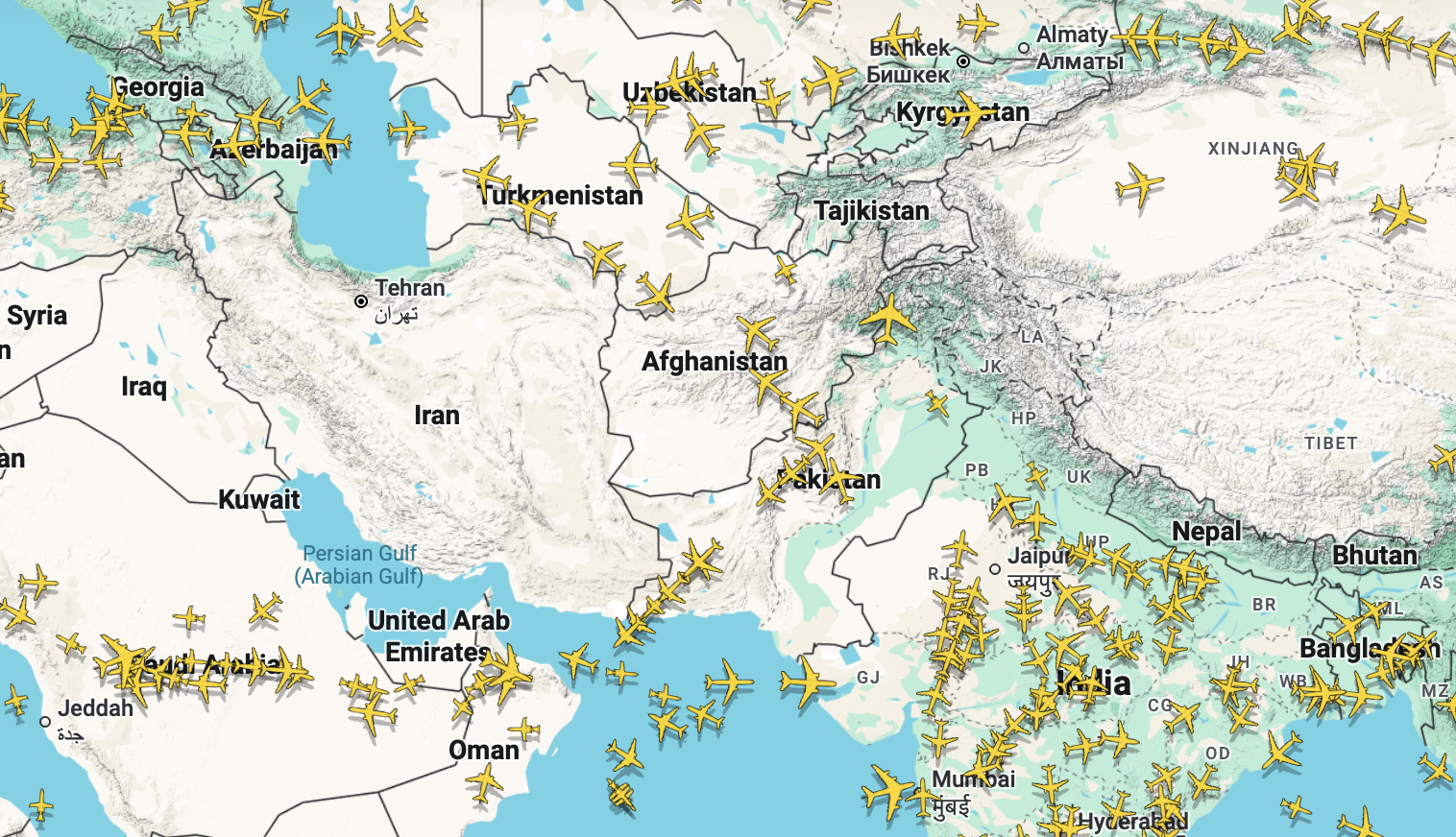
Flight tracking data indicated that commercial overflights through Pakistani FIRs continued outside the specified route segments and time window, with airlines able to use alternative routings.
The authority also urged media organisations and social media users to rely solely on official statements and to “avoid speculative or inaccurate headlines that could cause unnecessary concern among passengers and the wider public”.
The timing of the notice has drawn attention, given the intensification of Pakistan’s security situation. On 27 February, clashes with the Taliban in Afghanistan escalated into an operation termed ‘Ghazab lil-Haq’ (‘Righteous Fury’) by Islamabad, prompting speculation that the route adjustments may be linked to military activity.
Shortly after Pakistan launched its operation, Gulf countries, including Qatar and Saudi Arabia, attempted to ease tensions, but these efforts were cut short as the countries became embroiled in wider Middle Eastern hostilities, further destabilising the regional security landscape.
Iran, Iraq and Jordan have imposed varying degrees of airspace limitations, while routes over the Gulf have faced intermittent restrictions, further destabilising the regional security landscape.
Against this backdrop, almost 300 flights between Pakistan and major Gulf hubs, such as Dubai, Doha, Abu Dhabi, Muscat and Sharjah, have been cancelled over the past 24 hours due to wider regional airspace disruptions. According to Dunya News, at least 116 flights bound for Pakistan from the Middle East were grounded in a single day, leaving thousands of passengers stranded across the region.
⚠️⛔️⚠️
— PIA (@Official_PIA) February 28, 2026
In view of the developing situation in the Middle East, #PIA is suspending its flights to #UAE 🇦🇪, #Bahrain🇧🇭, #Kuwait🇰🇼 and #Doha 🇶🇦 till tomorrow evening, or till opening of respective airspaces.
Flights to #KSA 🇸🇦 have been rerouted, avoiding conflict hit zones.…
The ‘Silk Air Road’ has been forced into a narrow Caucasus–Caspian corridor as airlines try to avoid the ‘no-fly’ zones in Iran, Iraq and western Pakistan. This ‘Baku bottleneck’ is adding 90–120 minutes to standard routes, and some Asia–Europe flights are experiencing delays of up to five hours due to unscheduled refuelling stops. Real-time tracking reveals unprecedented congestion over Azerbaijan and Turkmenistan as the world’s east–west transit artery is squeezed into a single, high-pressure lane.
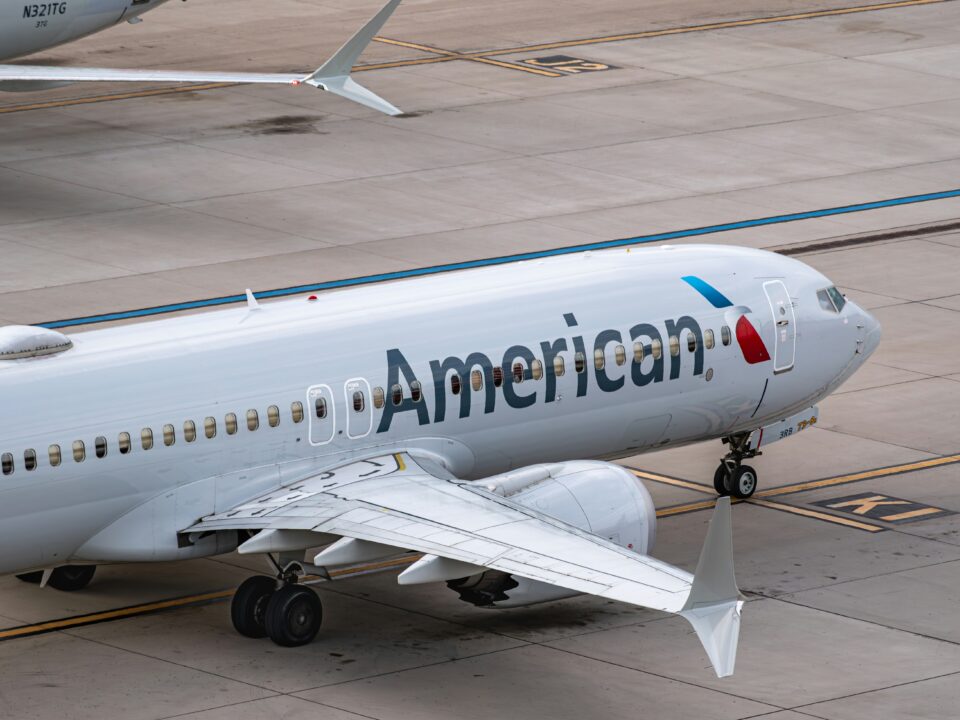
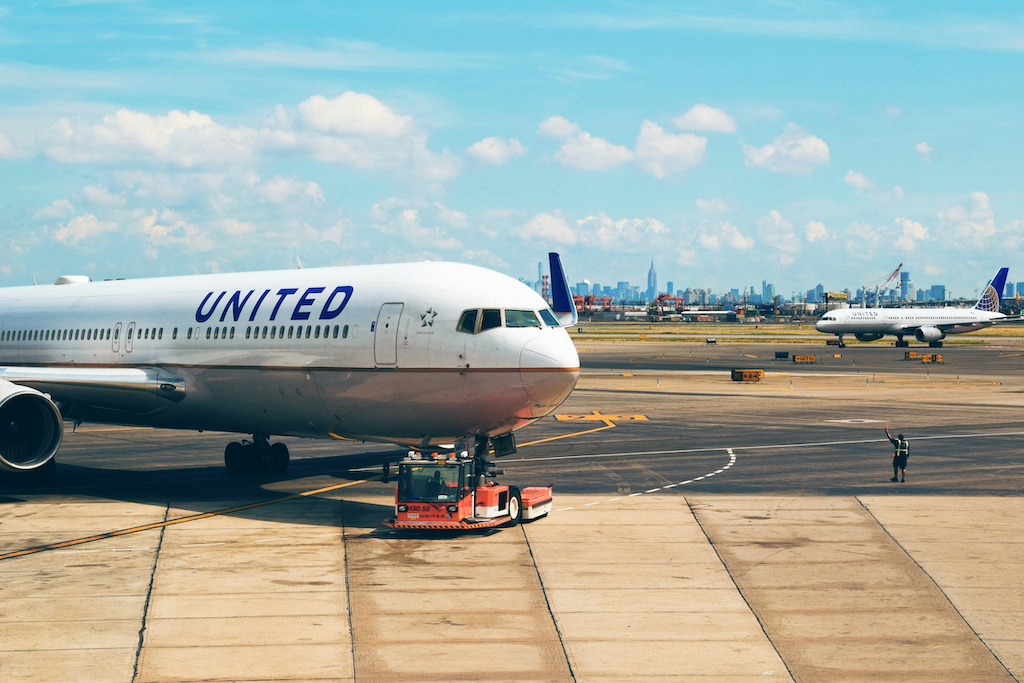
Markets have mirrored this turbulence. Travel stocks tumbled on Monday as the conflict showed no signs of abating. American Airlines and United Airlines both fell by around 6%, while TUI dropped by 9.6% and Lufthansa slid by 5.7%. According to Reuters and other financial outlets, the top 29 travel and leisure companies lost a combined total of around $22.6 billion in market value on 2 March alone. Meanwhile, oil prices jumped by 13%.