The aviation sector is a driving force in the current globalised society. Every day, airports see hundreds of flights, and the European airspace is busier than ever. According to aviation professionals and stakeholders, the industry must innovate quickly, not only in its sustainable practices but also in terms of digitising airport processes and streamlining the passenger experience.
Tourism growth
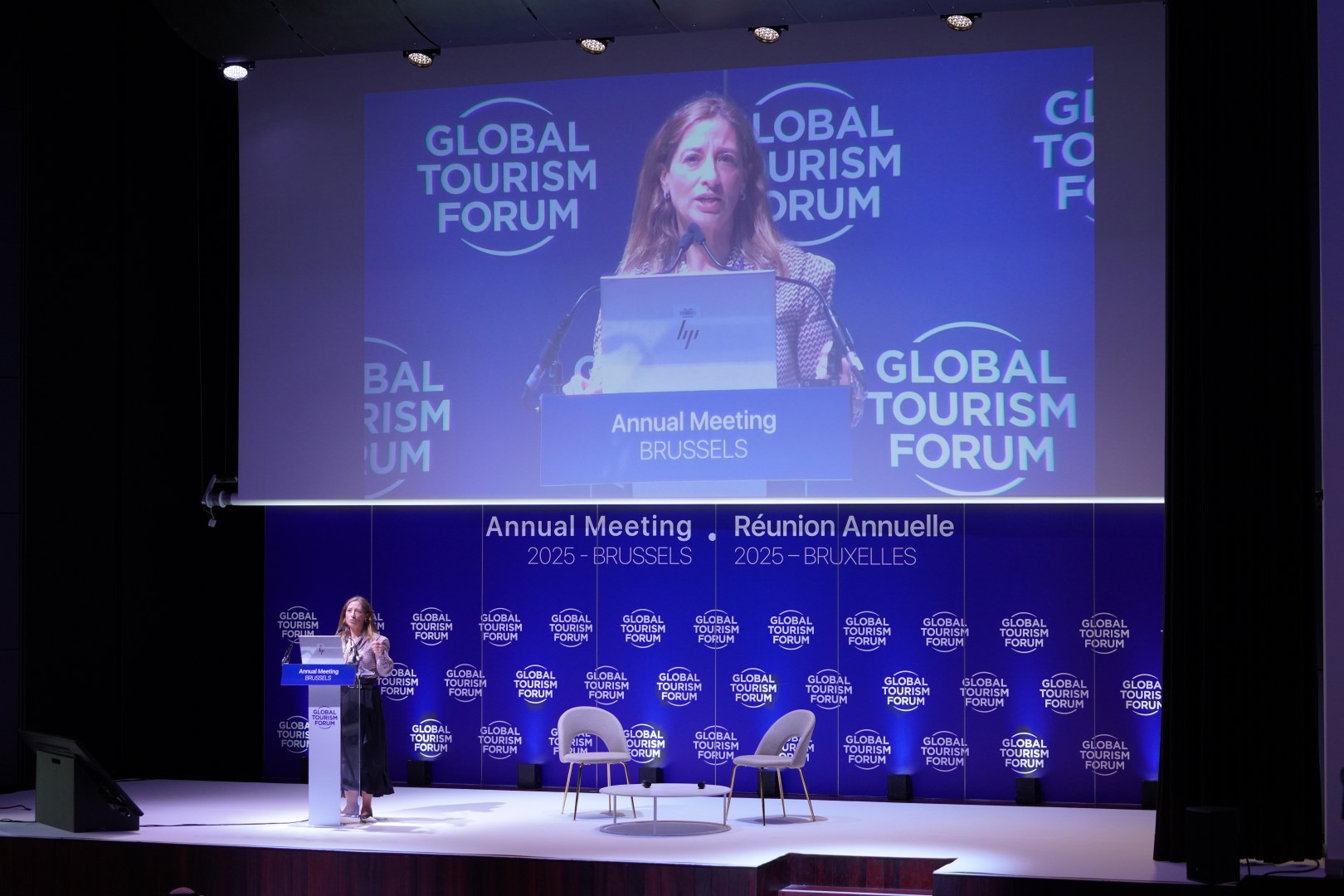
“The summer of 2025 saw an average of 35,000 flights per day across the European network, which is one per cent higher than the pre-pandemic levels of 2019,” highlighted Tânia Cardoso Simões, Director Aviation Transformation at EUROCONTROL, during the Global Tourism Forum (GTF) that took place in Brussels last 20-21 October.
Simões noted that, according to EUROCONTROL’’s latest report, the European airspace is expected to handle around 11 million flights by the end of 2025. The figure is projected to rise further in 2026, reaching approximately 11.4 million flights. By 2031, Eurocontrol anticipates around 12.4 million flights across the continent.
Moreover, according to Eurostat, overnight stays in EU tourist accommodation reached 1,279 million in the first half of 2025, marking a 2.3 per cent rise from the 1,249 million recorded during the same period in 2024. Foreign visitors accounted for almost half of the overnight stays, with Malta, Cyprus, and Croatia recording the highest overnight stays.
Airport infrastructure and hospitality
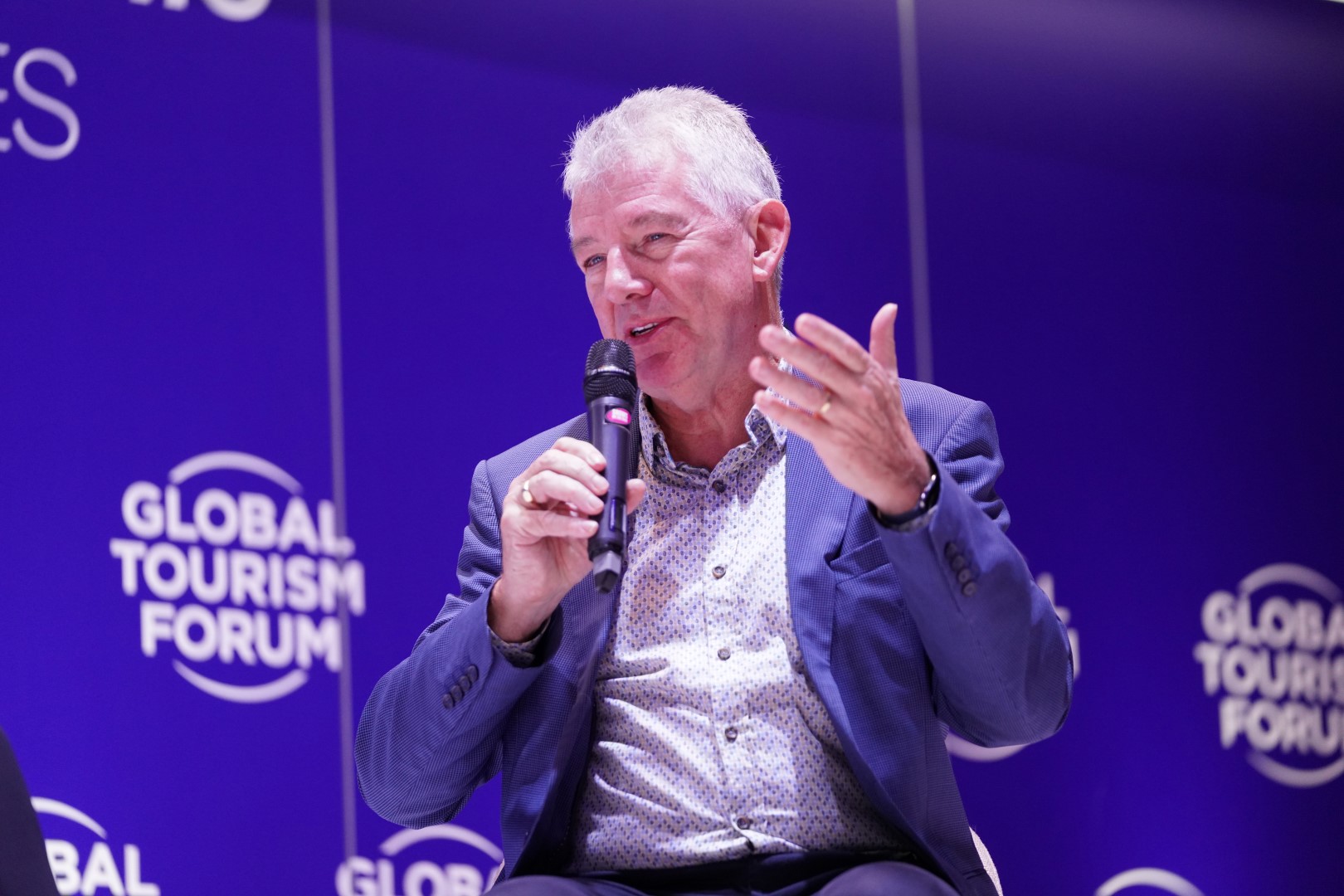
To handle the growing number of passengers and tourists and the pressure on aviation staff, the industry needs transformative changes. One way to do this, according to Paul Griffiths, CEO of Dubai Airports, is to “merge check-in, immigration, and security into one seamless process.” This would not only improve airport capacity, said Griffiths, but also improve passenger purchasing. “If you have gone through the check-in a few minutes, then you are going to be far more predisposed to spend money,” Griffiths noted with humour. Such a move would help airports achieve better financial sustainability.
Besides airport infrastructure, hospitality also has to improve in order to provide travellers with a better customer experience. Regardless of the technological advancements of the 21st century, human interaction and experience are what make a difference for regular flyers. “If people are trained properly, we can be a genuine hospitality experience,” remarked Griffiths. “We need to communicate with travellers on an individual basis and to make absolutely sure we are reassuring them.”
Sustainability Aviation Fuel
With thousands of daily flights, cutting emissions is one of aviation’s top priorities, making the use of sustainable aviation fuel (SAF). SAF, according to the International Air Transport Association (IATA), is a fuel used in commercial aviation that reduces carbon emissions by up to 80 per cent. It can be produced from various sources such as waste oil and fats, green and municipal waste, and non-food crops.
Both Griffiths and Simões agree that this is something that should change in the current aviation operations. “We have to incentivise production. Our idea is by 2032 to have sustainable fuel to represent a significant share of aviation’s fuel,” Griffiths explained.
To support SAF development and deployment, in July 2025, the aviation industry, represented by DESTINATION 2050 partners, fuel suppliers, and cargo and express delivery operators released a call for accelerated policy that would help de-risk investment, bridge the cost gap between conventional and sustainable fuel, and create the regulatory and financial conditions needed to scale up the production and deployment of SAF.
Simões not only highlighted the importance of SAF but also added other important components of sustainable flights. She noted that hydrogen combustion and electric batteries can also be utilised for standardising more sustainable aviation operations. Hydrogen combustion in this context works like jet fuel – it is burned to generate thrust.
Hydrogen-powered airplane would emit only water vapour instead of carbon dioxide, but storing hydrogen requires cryogenic tanks capable of maintaining temperatures as low as –253 °C, since hydrogen must remain in a liquid state at such extremes. The tanks require significant space, which would mean the aircraft would have to be redesigned.
Despite these difficulties, Airbus has made publicly available its designs for an electric, hydrogen-powered airplane. Airbus initially indicated that the aircraft was scheduled for its first flight in 2035, but according to new data, this won’t happen until later in the decade.
In the future, airports also need to become greener and energy self-sufficient. Soon, Griffiths pointed out, “every single surface of Dubai Airports will be covered with solar panels.” In this way, airports would be able to produce the necessary energy they need to operate independently.
Artificial intelligence (AI)
Automation and digital aviation will also play a crucial role in modern airports and the future of aviation. Currently, in the United Arab Emirates, AI is used when an aircraft arrives at an airport gate, according to Frederico Fernandes, CEO of WIZE. Fernandes explained that the technology monitors the different teams working around the plane – refuelling, baggage, maintenance, security, and boarding. He also added that AI identifies what is happening and helps the operations centre manage everything in real time.
Moreover, AI has also been deployed for luggage monitoring, which decreased the number of mishandled luggage in 2024. Another use of the model was piloted in the UK, where London Heathrow Airport tested an AI air traffic system. This aims to support air traffic controllers, while they remain “at the heart of the operation.”
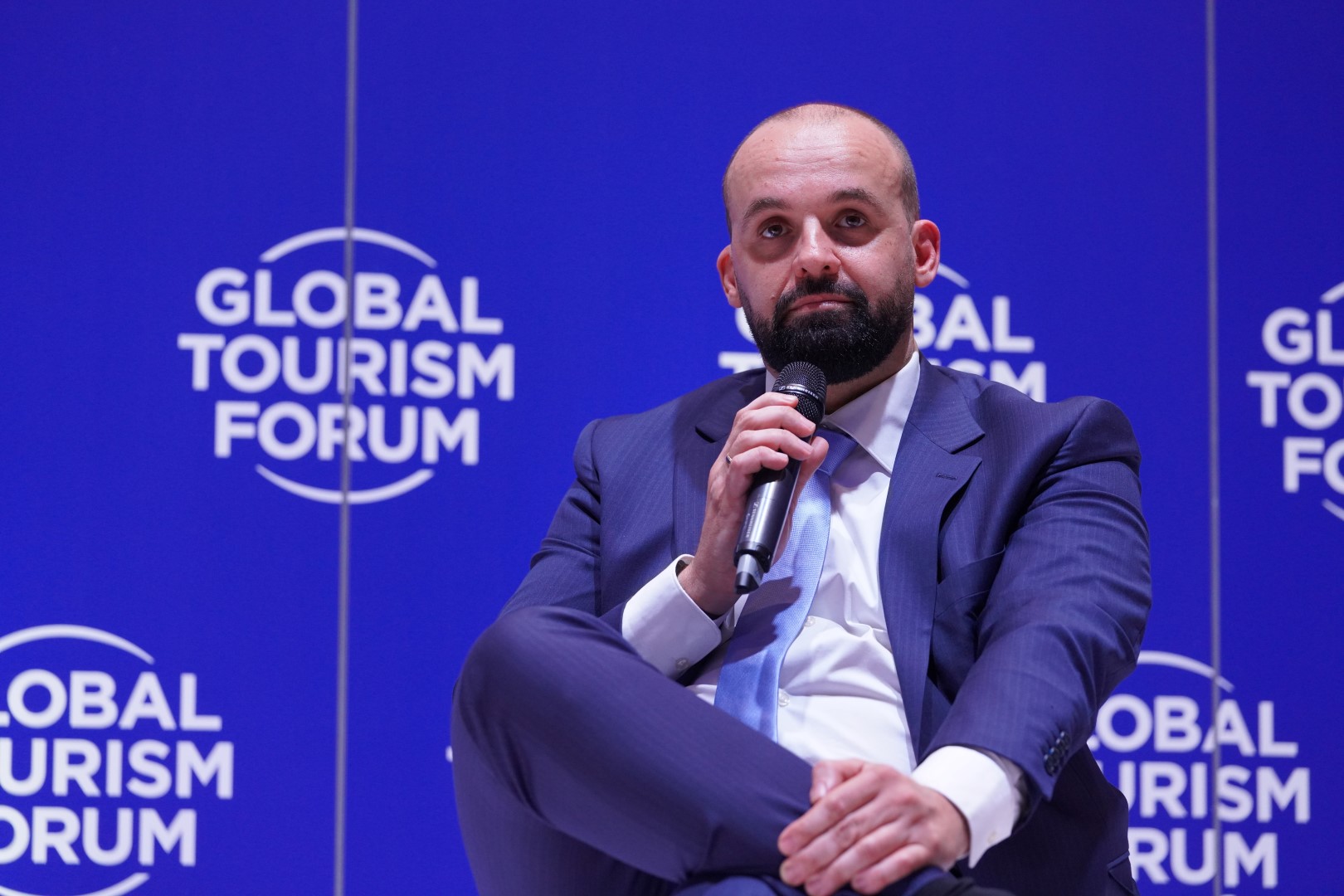
While AI could be used to optimise many processes in the industry, many are still worried about AI taking over human operations. “One of the most important questions I get is whether AI is going to be a pilot. And the answer is simple: absolutely not,” he highlighted.
He explained that rather than replacing pilots, AI can complement them. According to Fernandes, his company is the first in the world to offer students pilot training through an AI-based platform. But he explained that he is also aware that people cannot let a “delusional” AI make decisions.
What might the sky of tomorrow look like?
“The future seems bright”, for Tânia Cardoso Simões, from EUROCONTROL. She envisions a “sky where aircraft fly silently, operating with clean energy, as well as airports that generate more power than they consume and flights that waste neither fuel nor time.”