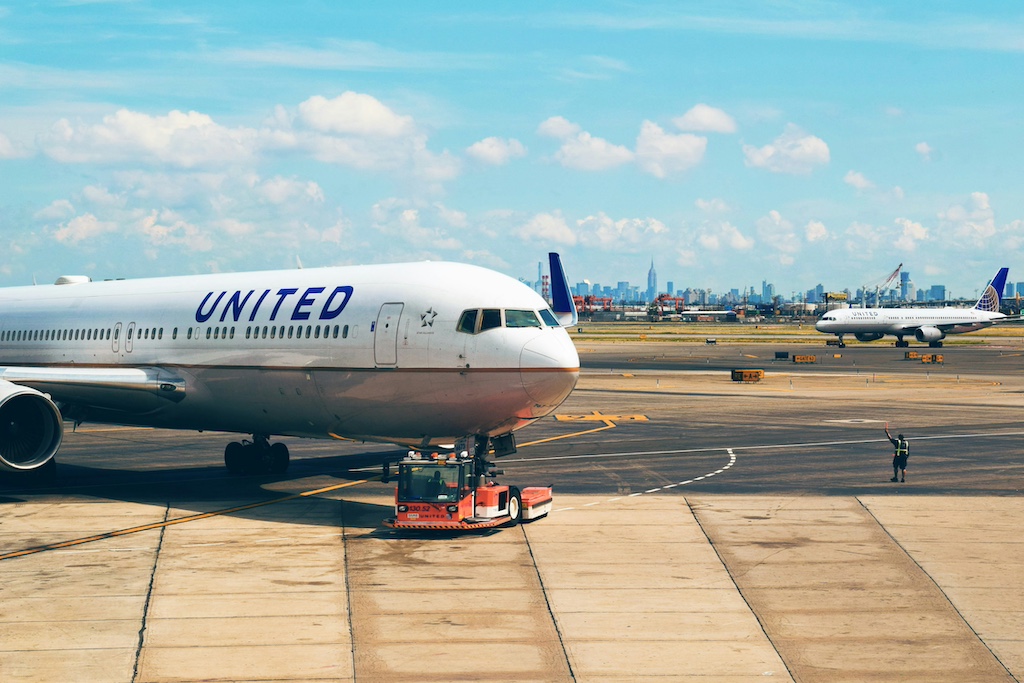


United Airlines has announced it will cut around 5% of its planned flights in the short term in response to the surge in fuel prices linked to the Middle East conflict, which has been disrupting global aviation since late February.
In a message to employees published on the company’s website, CEO Scott Kirby warned that sustained high fuel prices could have a significant financial impact. “If prices stay at this level, it would mean an additional $11 billion in annual expenses just for jet fuel,” he wrote. He added that the airline is preparing for a scenario in which oil could rise to $175 per barrel and remain above $100 until 2027.
Following the escalation of the conflict and the disruption of flights and shipping routes through the Strait of Hormuz, a critical artery for global oil supply, jet fuel prices have surged to levels not seen since 2022, immediately threatening airline profitability.
After labour, jet fuel is the single largest expense for airlines, typically accounting for around a quarter of operating costs. This leaves carriers walking a fine line between maintaining profitability and keeping fares at levels that passengers are willing to pay. One immediate option is to reduce capacity.
Although Kirby stated that demand has remained robust, he acknowledged that bookings could soften in the face of high energy costs. “If we’re right that oil prices will remain high for a prolonged period, we’ll be in a better position to make decisions that others will follow,” he said.
The airline is planning to resume its full schedule this autumn. In the meantime, it is cancelling 3% of its capacity during off-peak periods in the second and third quarters, particularly for red-eye flights and on less popular travel days such as Tuesdays, Wednesdays and Saturdays. This is in addition to having suspended all services to Ben Gurion International Airport in Israel and Dubai International Airport in the UAE, which account for a further 1% of capacity.
The Flightradar24 Gulf airline recovery index, 23 March. Small adjustments the past few days for most airlines. pic.twitter.com/vkoyMkdbdq
— Flightradar24 (@flightradar24) March 24, 2026
The remaining 1% will come from flight cancellations linked to capacity limits imposed by the FAA at Chicago O’Hare this summer.
Kirby stressed that, given the airline’s stronger financial position today, United would not need to resort to the kind of drastic measures taken during previous crises, such as emergency groundings or large-scale redundancies.
“We will continue full speed ahead to take delivery of around 120 new aircraft this year, including 20 new 787s, and we will have taken another 130 new aircraft by April 2028,” Kirby said.
The broader outlook for the industry, however, remains bleak. Even if a resolution to the conflict were reached tomorrow, analysts warn that this would do little to provide immediate relief. Restarting oil production, repositioning tankers, reopening LNG facilities, and stabilising shipping routes could take months. In the meantime, supply chains will remain misaligned, insurers will remain cautious and key transit routes, including the Strait of Hormuz, will remain uncertain.
BREAKING: The Strait of Hormuz is no longer closed. It is no longer open. It is something the world has never seen before: a permissioned corridor run by the Islamic Revolutionary Guard Corps, priced at $2 million per vessel, payable in yuan.
— Shanaka Anslem Perera ⚡ (@shanaka86) March 24, 2026
Three ships transited in the last 24… pic.twitter.com/RT3xGeuTqp
Moreover, the damage is already mounting. Last week, American Airlines CEO Robert Isom said that his company had spent an additional $400 million on fuel since the conflict began. He added that, should prices remain high, “we’re certainly going to be nimble in terms of capacity to ensure supply and demand stay in balance”.
Time, in other words, is not on the industry’s side. As Ahmed Abdelghany, Professor at Embry-Riddle Aeronautical University, told Wired: “The longer it goes on, the more problematic it becomes for the remaining airlines.” Commenting on LinkedIn on United’s decision to cut 5% of its capacity, he was unequivocal: “It is the right move at the right time.”