

Connectivity to one of the world’s most remote and sparsely populated territories has just improved again, with the completion of Greenland’s two-year airport development project adding yet another new international gateway in Ilulissat.
Since 2024, the Arctic country has added three new aviation hubs. Serving the capital and acting as the technical base for Air Greenland, Nuuk Airport opened in November 2024. Just a year and a half later, in April 2026, Qaqortoq—the largest town in the south and known for its fjord system and 18th-century colonial architecture—opened its own airport. And now, Ilulissat, on the west coast around 250 km north of the Arctic Circle, has gained wings too.
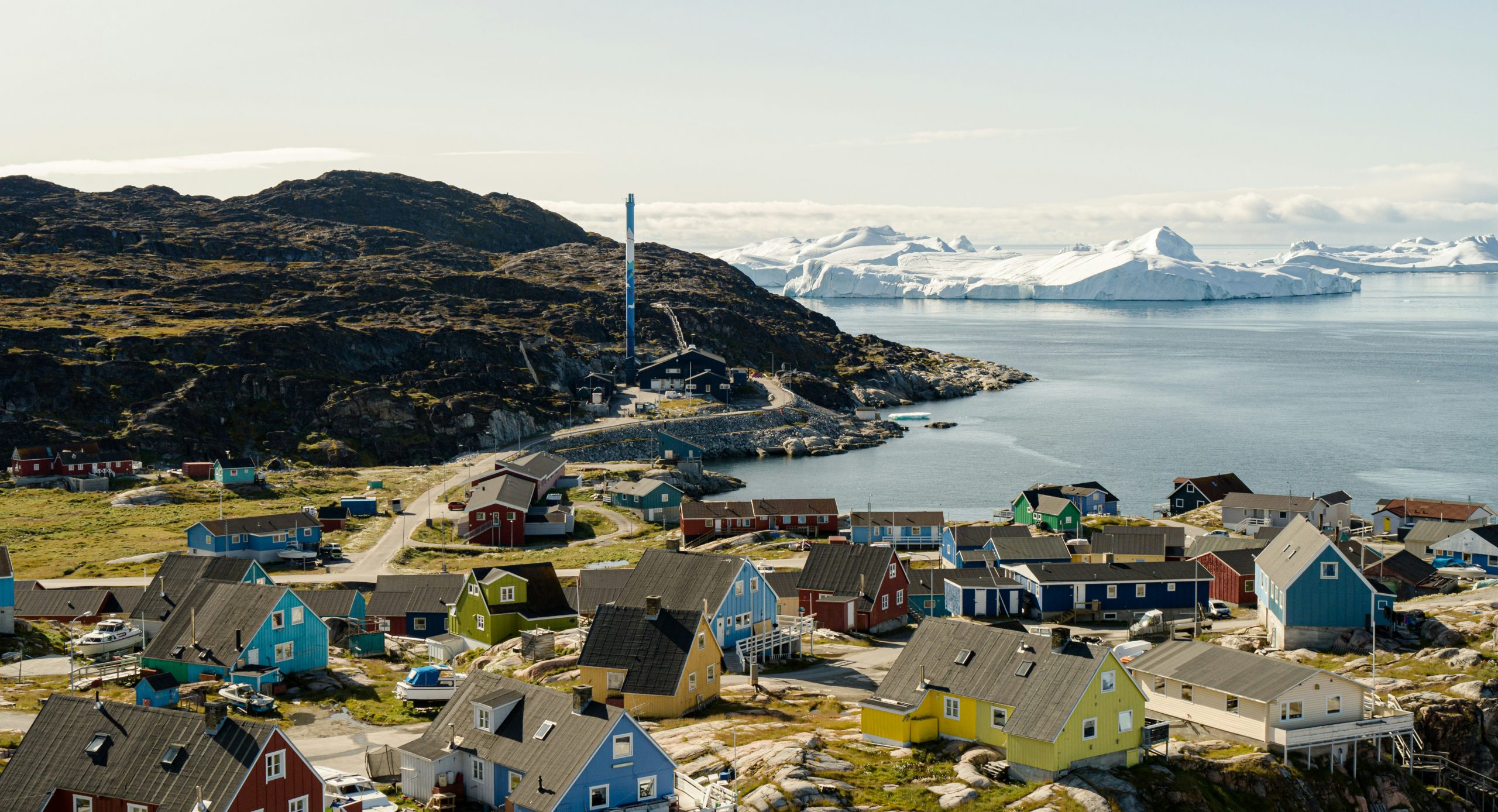
Ilulissat is the country’s third city, with 5,000 inhabitants, over 2,000 sledge dogs, and a UNESCO World Heritage landscape of awe-inspiring icebergs. The town now also boasts a 2,200-metre runway able to welcome select widebody operations with light-to-medium loads or regional variants (like the Airbus A330-800 Neo and Boeing 737-800 under specific conditions).
On the airport’s opening day, Air Greenland immediately launched a schedule, with domestic links to Nuuk, Aasiaat, Qaarsut, and Upernavik, as well as an international connection to the Danish capital, Copenhagen. The regular service will fly once a week on Wednesdays but add extra flights to cater to Christmas and New Year demand, as well as further departures from spring 2027. Icelandair too is planning seasonal flights from Keflavík between June and October 2027. The growth in connectivity is set to introduce visitors to Ilulissat’s colourful timber-clad houses, historic fishing and hunting culture, and the rich marine life of Disko Bay.
Hailing the airport’s potential contribution to the region, Jens Wittrup Willumsen, Chairperson of the Board of Greenland Airports, said: “Infrastructure is a long-term investment, and its real impact is measured in decades. With the three new airports, Greenland has a foundation that future generations can build on.”
Willumsen also acknowledged the challenge that faces many destinations around the world: balancing tourist arrivals and economic advancements with wider local needs. “Now the task is to ensure that the new facilities benefit the entire country, including the towns and settlements around the airports, as part of the future development of business and tourism,” he said.
Jens Lauridsen, CEO of Greenland Airports, echoed those words, predicting that, together, the three new hubs would “fundamentally change how the country is connected internally and how Greenland is connected to the rest of the world.”
Likewise, Linda Kleist, CEO of Visit Greenland, described the launch of the new hub as “another important milestone for Greenland,” and recognised the “new opportunities for tourism across our regions” while cautioning: “But infrastructure alone does not create lasting value. What matters is how we build on these opportunities together – strengthening local businesses, creating opportunities across our communities, and shaping tourism development that respects our nature, culture and way of life.”
Greenland’s profile has been elevated in recent times due to US President Donald Trump’s ongoing focus on the Danish territory, which he has repeatedly said he wants to acquire from Denmark, raising the hackles of NATO members. Still, Denmark and Greenland signed a deal with Trump in September 2026 with a view to improving Arctic security, amid concerns about Chinese and Russian interest. At the same time, European Commission President Ursula von der Leyen announced a €200-million Global Gateway Partnership Package for the period 2026–2027, saying, “Greenland can count on the EU.”
Following Greenland’s press releases about the new Ilulissat airport, Trump continued his provocation, posting on his social media account an AI-generated image depicting the new hub as a US airport with a US flag flying above.