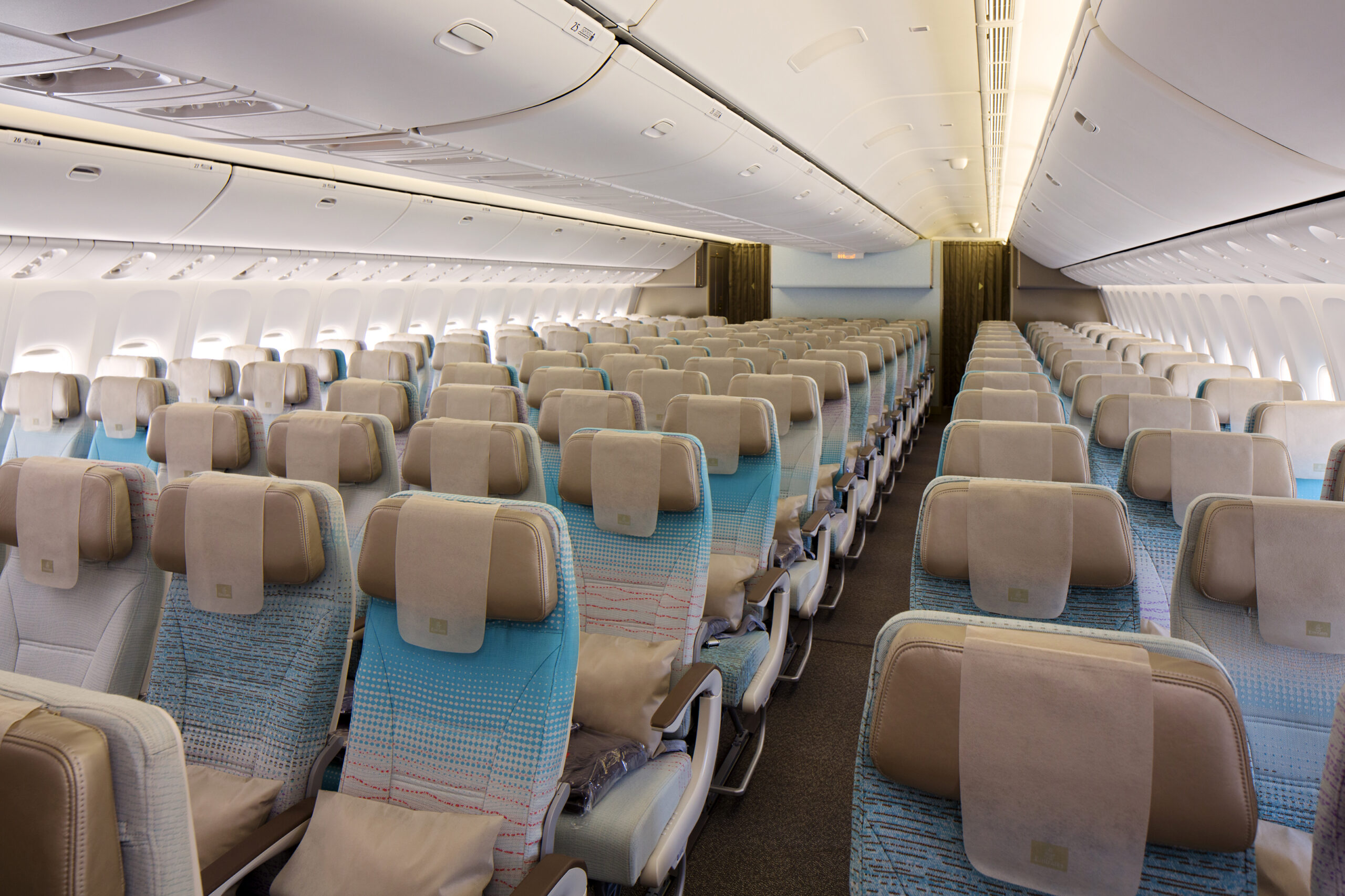
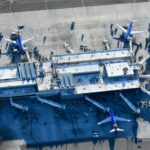

Rows of empty seats and unusually quiet cabins are being reported on flights to the Emirates and Qatar, according to travellers’ videos shared on social media, as the conflict in the Middle East enters its third week.
One TikTok creator, who splits her time between London and Dubai, posted a video showing how eerily empty and silent her flight was, saying that she had never experienced such a quiet service before.
@alishhba.s Never saw a dubai flight this empty literally trusted @Emirates with our lives rn!! #dubai #war #flights #trending #fyp ♬ House featuring John Cale – Charli xcx & John Cale
Similarly, a Qatar resident shared his experience of a Beijing – Doha flight. Although the plane had space for around 300 passengers, there were only about 20 travellers on board, including two in business class – a stark illustration of the sharp fall in demand for travel to the region.
Another passenger flying from Riga to Dubai described her flight as ‘weird’, saying she was surprised but relieved it had not been cancelled, as she had recently received a job offer in the United Arab Emirates.
The low passenger numbers on flights to the region are being driven by aviation disruptions, rising oil prices, and ongoing security concerns that have unsettled travel across the region since 28 February. The crisis escalated following a joint US – Israeli strike on Iran, which responded by targeting several countries, regional US air bases, and energy infrastructure. It also closed the Strait of Hormuz, a key global oil shipping route.
@made_on_earth_by_humans Here’s what one of the world’s busiest airports looks like right now… Hamad International in Doha, Qatar, totally empty.
♬ original sound – Made_on_Earth_by_Humans
This quickly affected aviation, forcing airlines to reroute flights and temporarily ground some services across the region. Although many flights have since resumed, the recovery remains uneven.
Several governments continue to advise against non-essential travel to parts of the Middle East, and passengers travelling between Europe and Asia are increasingly choosing routes that avoid the risk of sudden airspace closures or diversions.
Meanwhile, oil prices have surged in the wake of Iranian strikes on energy facilities in Saudi Arabia and Bahrain. This is pushing up airline operating costs and ticket prices, further discouraging leisure travel to the region.
Together, these factors have sharply reduced demand for flights to Gulf hubs such as Dubai and Doha, leaving some aircraft operating with unusually low passenger numbers.
For now, many of those still travelling to the Emirates and Qatar appear to be expatriates returning home or travellers connecting to other destinations, such as Australia or countries in Asia. The ongoing conflict has also impacted tourism. The World Travel and Tourism Council (WTTC) estimates that the disruption could cost the region up to €523 million.
Daily Gulf airline operations for 15 March. Emirates flights climbed again on Sunday and Etihad operated more than 100 flights for the first time since the war began. pic.twitter.com/4RQDelE1Uj
— Flightradar24 (@flightradar24) March 16, 2026
Additionally, many airlines have given passengers the option to postpone their travel, which has further reduced the number of passengers on some flights. Emirates, for instance, is enabling passengers who booked between 28 February and 31 March to reschedule their journeys until 30 April or request a full refund.
These measures, combined with security concerns and higher travel costs, have resulted in some flights to Gulf hubs having unusually low passenger numbers.
However, the passengers who do travel have highlighted an unexpected upside to the situation: with so few passengers on board, the crew had plenty of time to attend to travellers, providing ample food and service.