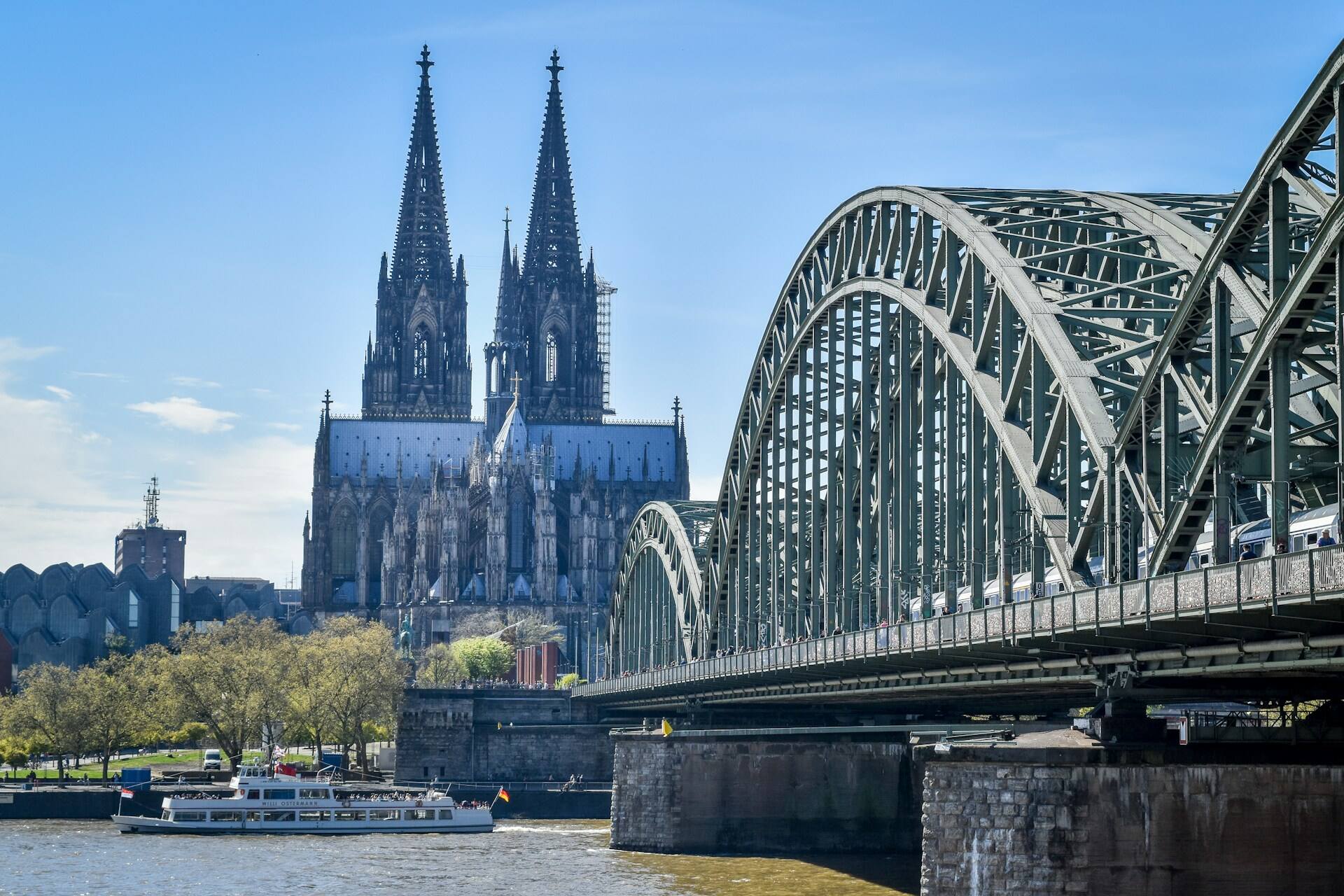



Plans to introduce a new visitor charge at Cologne Cathedral in Germany are splitting opinion between those who say churches should remain non-commercial spaces and that access to the UNESCO-recognised Gothic masterpiece should not be restricted, and those who point to the high and rising costs of maintaining such buildings.
Dating back to 1248, Cologne Cathedral is one of the most recognisable monuments of Catholicism. Once the tallest building in the world, it took 632 years to build and features two huge spires that give it the largest facade of any church anywhere. UNESCO has said, “No other cathedral is so perfectly conceived, so uniformly and uncompromisingly executed in all its parts.”
A place of pilgrimage, it is Germany’s most-visited landmark, welcoming six million people per year, according to official records. Until now, entry to the cathedral has been free, although visits to its tower cost adults eight euros, and combo tickets, for both the tower and the treasury, are priced at €12, with reductions available.
But from an unspecified date later in 2026, the cathedral is set to bring an admission fee into force. While the future entry cost has not been confirmed, The Guardian has cited estimates of between €12 and €15. Worshippers would not pay, but this is not expected to cause a shortfall, since the cathedral’s dean, Guido Assmann, told German news agency dpa that tourists account for 99% of visitors.
The money raised would go towards the church’s maintenance bills, which are expected to hit €16 million this year, as well as helping to build up funds that were lost during the pandemic shutdown. “We have reached a point where the reserves of Cologne Cathedral will be depleted in the foreseeable future,” cathedral administrator Clemens van de Ven told Agence France Presse.
German views are divided on the matter. Barbara Schock-Werner, an architect who leads the non-profit conservation group Zentral-Dombau-Verein zu Köln (ZDV), has called the move potentially “unfair” and “very, very regrettable,” telling local press, “If only the well-off can afford to go into a church, I think that’s socially unjust.”
But artist Gerhard Richter, who designed bespoke, 20-metre, stained glass windows for the cathedral in 2007, disagrees. Richter, now in his ninth decade, told dpa he supports an entrance charge and noted that the cathedral would not be alone in introducing one.
Richter is right. While some of the world’s most famous churches do not charge to enter, such as St Peter’s in Rome, or Notre Dame in Paris which proudly boasts it is “open to all, freely and without charge,” others do charge an admission, including Gaudi’s iconic Sagrada Família in Barcelona, where the €26 entrance fee has been going towards ongoing construction works for years. This year, however, it is going in the opposite direction to Cologne, opening its doors for nothing on some dates and offering a 50% discount on others, to celebrate its centenary.