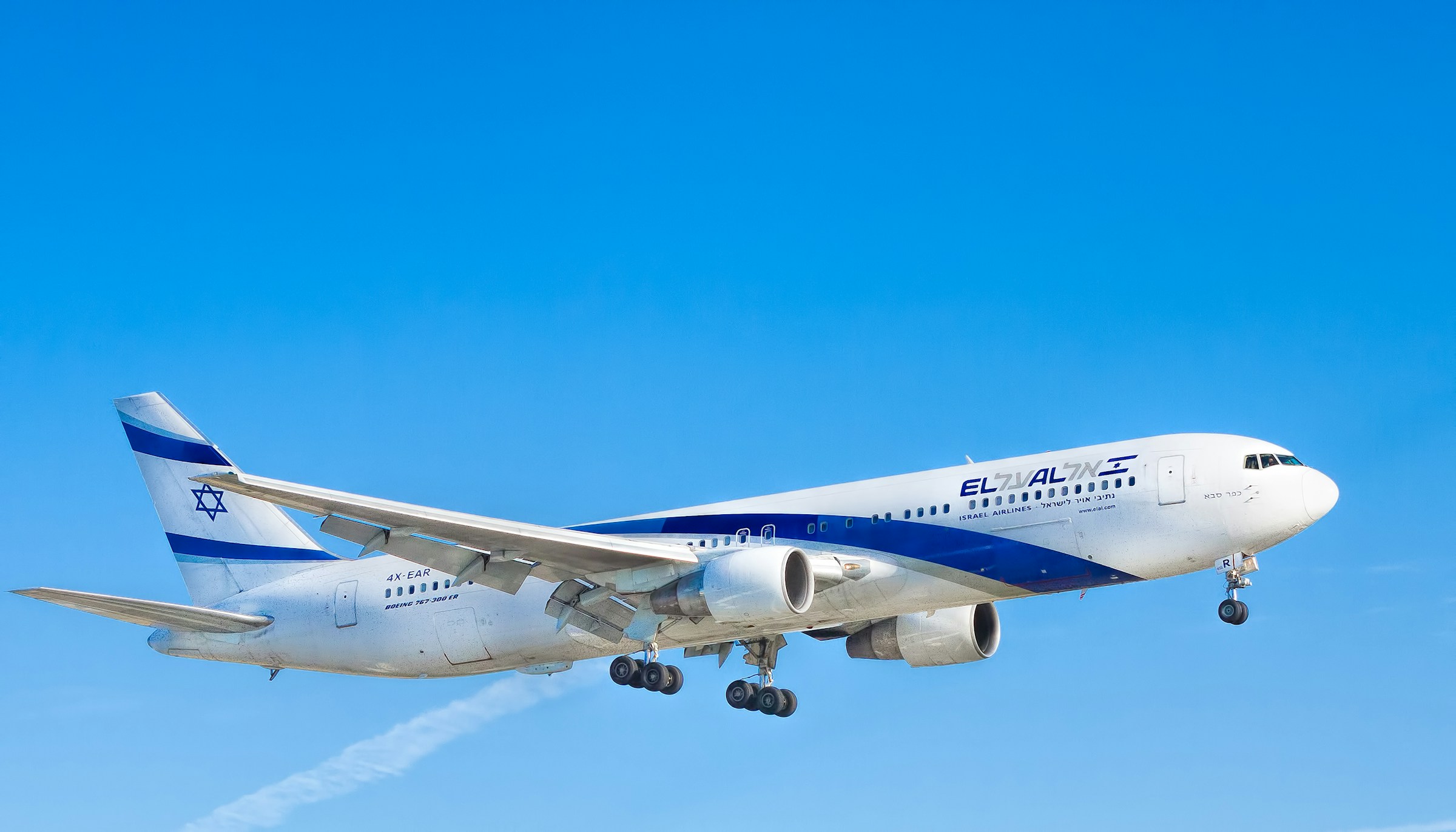


El Al Israel Airlines is showing growing signs of impatience with the ongoing Middle East security situation due to continued missile fire and restrictions on operations at Ben Gurion Airport, and the lack of alternative connectivity.
The Israeli flag carrier said it would review “its continued operations” at Ben Gurion, following a Transportation Ministry order to reduce the capacity of flights departing Ben Gurion by half, dropping the cap from 120 passengers to only 50 passengers per takeoff. Israel’s Transportation Minister Miri Regev said the move was being made based on the recommendation of security officials. While there will be no upper limit on inbound planes, the number of departures and arrivals at Ben Gurion is being limited to just one per hour.
Following the Ministry of Transportation’s decision that led to a dramatic reduction in aviation activity – limiting our outbound flights to 15 per day and capping each departure flight at 50 passengers – we are updating that we will operate a small number of flights to several… pic.twitter.com/c81BXihqr9
— EL AL USA (@ELALUSA) March 23, 2026
Like other major world airlines, El Al has been forced to cancel thousands of passenger journeys since the start of the war. A whopping 25,000 customers were affected in the one week running up to the Pesach Passover Festival, a significant pilgrimage holiday. El Al has had to clarify that, due to the flight restrictions, customers whose flights have been wiped from schedules will not be permitted to rebook but will instead have the option of a full refund or a credit voucher for future El Al flights.
Commenting on the situation, El Al said it is calling for “the opening of the Ramon Airport as a supplemental alternative to Ben Gurion Airport, in order to preserve the flight activity and allow a response to the passenger public.”
Meanwhile, El Al’s rival and the second-largest Israeli carrier, Arkia, has issued similar remarks, noting that “under the current framework, regular aviation activity cannot be maintained, as it practically means the closure of Israel’s skies.” Arkia is already diversifying its schedules by switching to Egyptian and Jordanian hubs, as preparations go ahead “to transfer activity to the airports in Aqaba and Taba, to maintain aviation continuity as much as possible,” Arkia CEO Oz Berlowitz confirmed.
💥 BREAKING: Arkia relocates operations abroad, effectively closing Israel’s skies under current restrictions.
— Mossad Commentary (@MOSSADil) March 23, 2026
Following limits at Ben Gurion Airport—50 passengers per flight—the airline will shift the bulk of its flights, including routes to New York, Bangkok, and Hanoi, to… pic.twitter.com/P8r2blAYsm
A third main competitor in the Israeli aviation market, Israir, has annulled its flight schedule to 31 March and is closed to bookings until the end of the following month, in line with nearly all other major world carriers, which have also cancelled their schedules for the region until well into April. Some have gone further. British Airways will not be flying to most of the Middle East (Amman, Bahrain, Dubai, and Tel Aviv) until at least the start of June 2026, although flights to Doha could recommence on 30 April if the security situation allows.