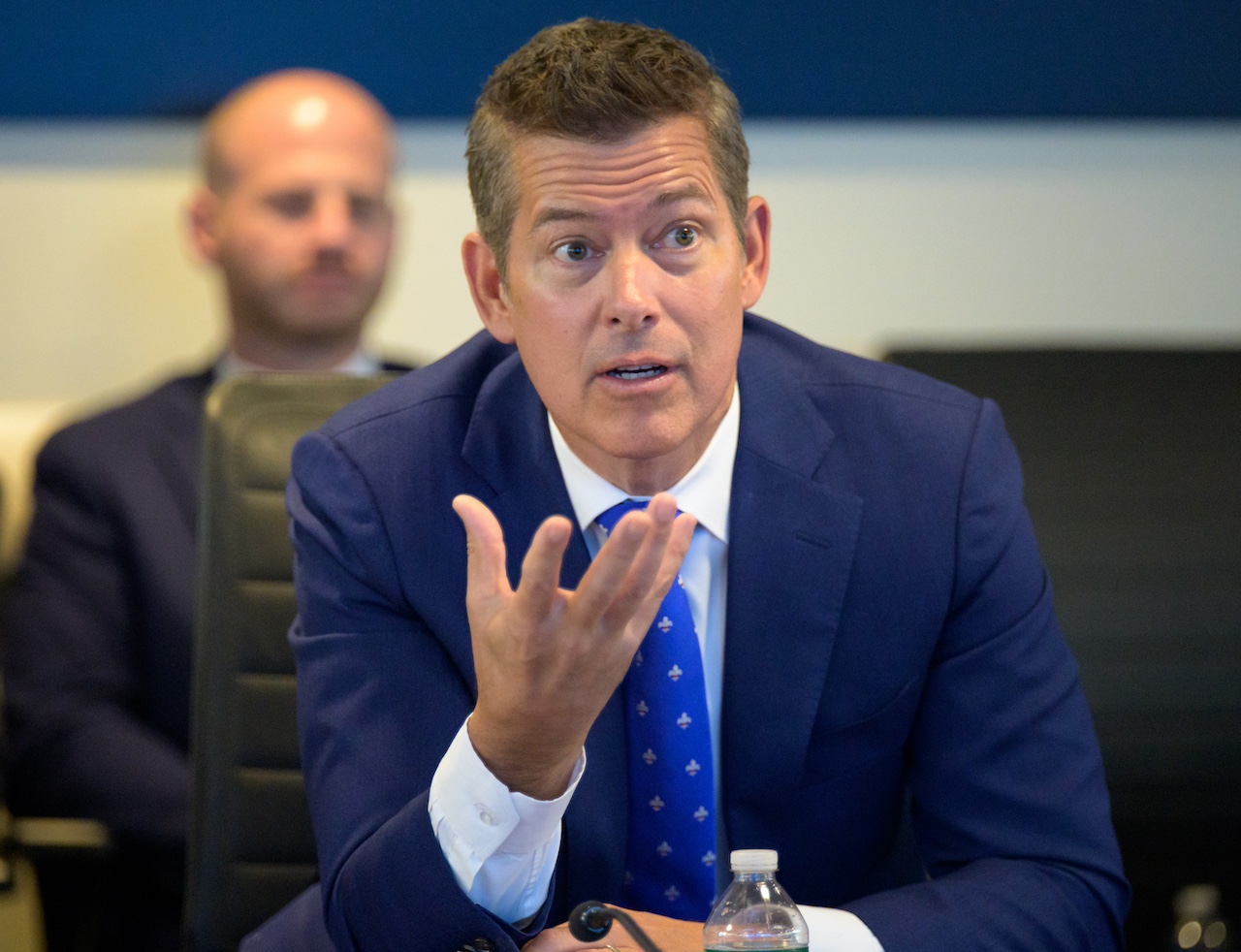



On 17 November several Republican senators said they would support new spending on air traffic safety but opposed the Trump administration’s $50.1 billion request for a broader overhaul of US aviation. Transportation Secretary Sean Duffy sought the funding after a four-hour nationwide ground stop on 13 November disrupted air travel and led to more than 18,000 flight cancellations.
Duffy had initially sought $30 billion, including $18 billion for airports. He presented the revised proposal to Senate Republicans on Tuesday, the same day he, Federal Aviation Administration (FAA) chief Bryan Bedford and White House budget director Russ Vought sent the request to the lawmakers who oversee federal spending.
.@SecDuffy details the request for funding to finish the job on air traffic control modernization. "We’re all working together to make sure people stay safe and we have the right equipment and technology in our airspace… I hope that the Congress joins us." https://t.co/chBGCPku7b
— Rapid Response 47 (@RapidResponse47) November 17, 2026
Airport spending emerged as a point of disagreement. The proposal sets aside $10 billion for airport infrastructure and a further $10 billion for passenger terminals. Senator John Kennedy called the increase from $30 billion to $50 billion a “huge mistake” and said he would oppose funding for local airports. Senator Rick Scott put the additional cost of fixing air traffic control at $10 billion and argued that airlines should contribute. “Congress has a role to play, but the airlines need to put up money and have skin in this game too. And yes, they can do it without raising ticket prices,” Scott said. Senator Jon Husted suggested a small fee for aviation users, so “taxpayers who are not flying don’t have to foot the bill.”
The administration is seeking $10.1 billion for the digital network, including more reliable communications and upgrades to the tools controllers use to keep aircraft safely apart. Another $10 billion would fund five new centres to replace the 22 that oversee aircraft at high altitudes. The newest of those centres dates to 1969. The remaining $10 billion would go towards building or upgrading as many as 140 control towers.
Senators also questioned how much of the $12.5 billion Congress approved in July 2025 had reached suppliers. Lawmakers said about 30% had been spent. Duffy said the department had allocated the full amount and pays contractors when equipment arrives. He cited radar systems now being built in Florida and Kansas as one example. “I only am going to pay when they deliver,” he said.
Here is what we did after Friday’s ground stop was lifted and what we know now: https://t.co/ojhnGWnu9f
— Secretary Sean Duffy (@SecDuffy) November 17, 2026
Democrats have asked for a fuller explanation of the ground stop before approving more money. Duffy said a newly installed router overloaded the network, disrupting communications and radar feeds. The FAA had installed the same router 68 times previously without incident. Investigators have reproduced the failure but are still working to establish why it happened, he said. All aircraft landed safely and normal operations have resumed.
Senate Commerce Committee chair Ted Cruz said he expected Congress to fund further safety improvements. Duffy indicated he would adjust his plans to the amount lawmakers approve. Speaking at a press conference on Tuesday after a weekly policy luncheon with Republican senators, Duffy said, “I’ll take what I can get, and I will work with the Congress to make sure that we do the highest priorities first,” adding, “I’m going to build with whatever they give me.”