
Travellers are increasingly setting their sights on celestial bodies, with solar eclipse tourism reaching a frenzy in Europe in 2026 and totality headed for the Egyptian pyramids in 2027. In line with such enthusiasm for turning our gaze starward, destinations that boast dark skies are proving popular—and now a new Dark Sky Park is planned for remote north-west Saudi Arabia, near the ancient city of AlUla.
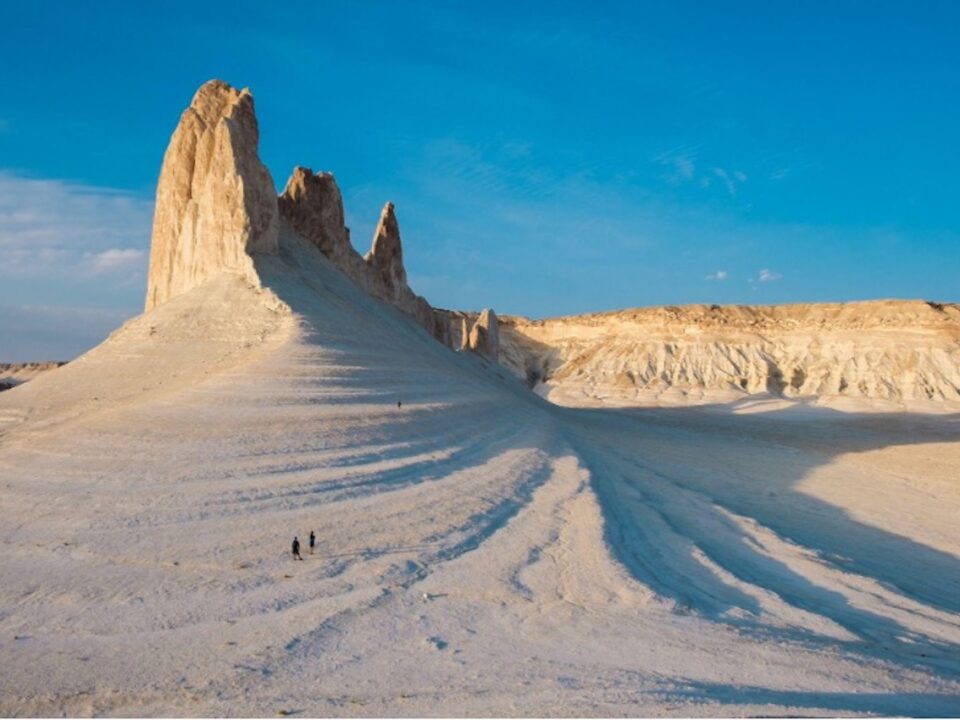
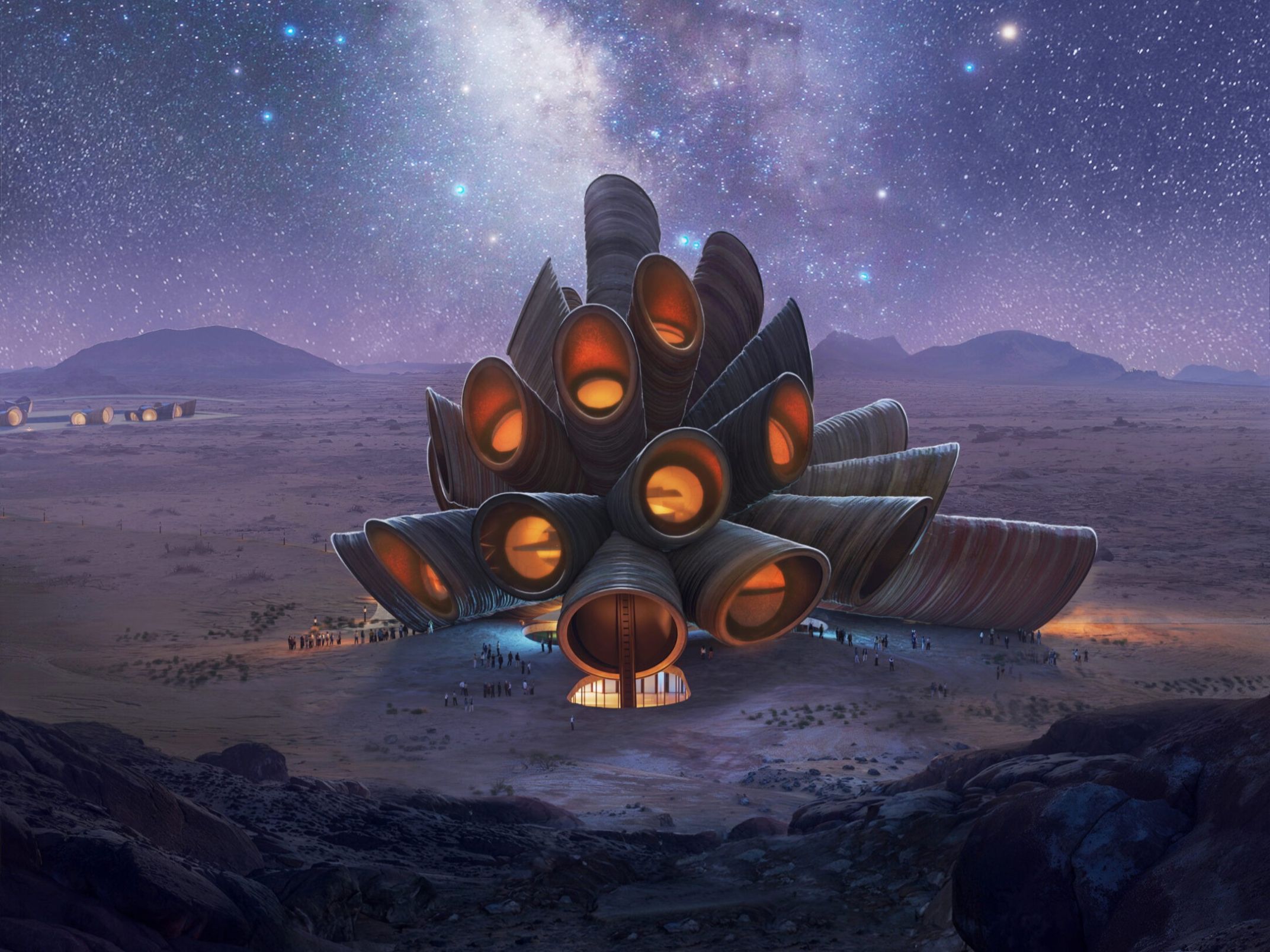
AlUla is already reputed for the over-100 UNESCO-recognised monumental rock-cut tombs carved into sandstone cliffs at Hegra. But now design studio Heatherwick is set to create one of the first Dark Sky Parks in the region, after winning an international design competition with a visitor centre, including a planetarium, restaurant, and rooftop deck, as well as a research hub, forming one of the world’s largest observatories.
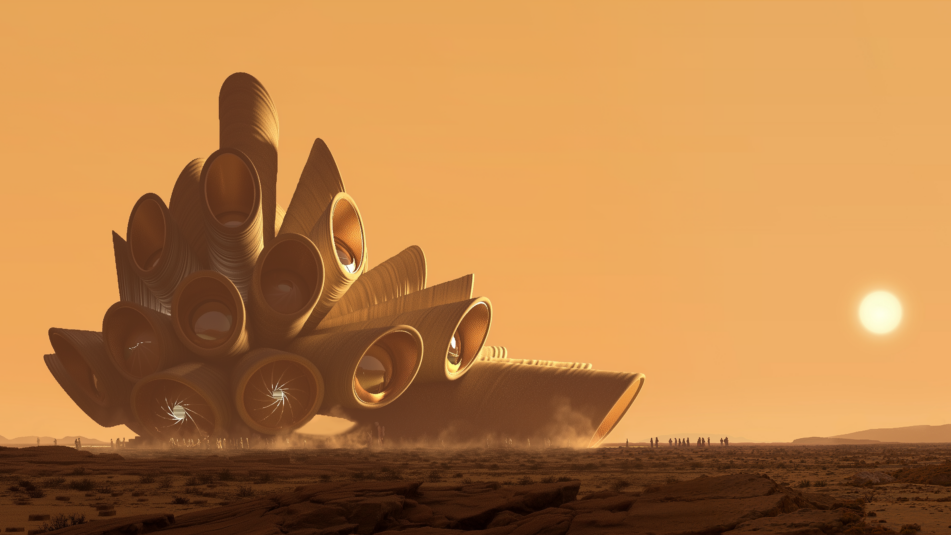
The astrotourism mecca will be composed of tubular, shell-like forms, rough-clad to speak to the sandstone landscape. It’s not the first time Heatherwick has put forward a design that connotes the “big bang”—with radiating elements from a central core evoking the birth of the universe. Hopefully, this time, it will not fall apart like the 56-metre-tall “B of the Bang” public sculpture the designer imagined for Manchester to commemorate the 2002 Commonwealth Games, which had to be dismantled seven years later due to falling debris.
Construction in the world’s wildest places is always controversial, but Stuart Wood, executive partner and group leader at Heatherwick Studio, noted that: “Space observatories are often remote, sterile places – technical outposts that feel distant from the public,” and explained, “we saw an opportunity to dissolve those barriers and create a place where visitors can step inside the wonder of the cosmos: an environment that is both immersive and inspiring, standing alongside the most advanced science of our time.”
The building’s tubes will boast shading devices to deal with daytime sunlight and preserve dark-sky visibility at night. Energy-efficient working windows will respond to changing desert weather and provide enviable vistas of the heavens and the earth all around.
Wood described the whole as inspired by the “dramatic spiralling geometries that shape both the solar system above us and the natural world around us. Three interlocking telescope-like formations reach skywards while remaining rooted in the desert landscape – embodying a dialogue between earth and universe.”
No opening date has been slated, but travellers are likely to be watching this space with anticipation. The wider masterplan holds a range of attractions aside from the on-site accommodation and stargazing lodge, including nearby hiking trails and remote pods. For now, there are no direct flights to AlUla International Airport from Europe, though domestic connections via Jeddah and Riyadh, as well as Gulf airports Doha and Dubai, are available.