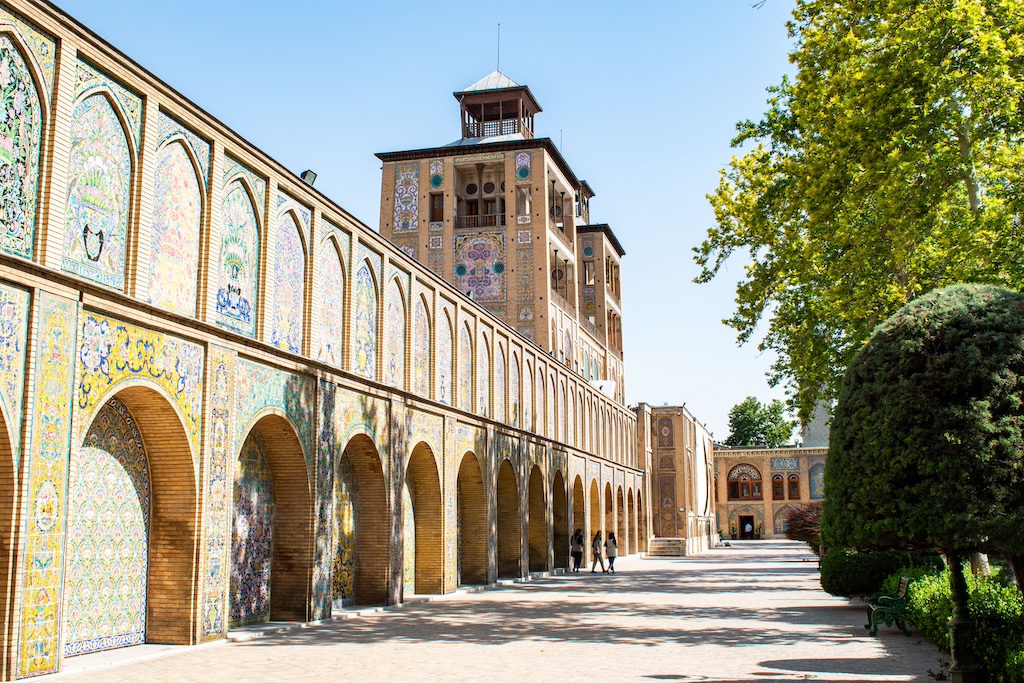



UNESCO has issued a statement of concern about risks to World Heritage sites in the Middle East, following military strikes that have cost hundreds of lives, as well as damaging the only such listed historic monument in the Iranian capital.
The more than 400-year-old Golestan Palace sits at the heart of Tehran’s historic district, near Arg Square. It is a complex of royal buildings that once served as a shah’s court and became the seat of the Qajars for over a century. The citadel boasts 17 structures, including palaces, museums, and halls that witnessed coronations and major events. Marrying Persian design and aesthetics with European motifs and conventions, it features rich decoration, intricate glass and mirrorwork, and distinctive orsi doors. The palace is also home to three major archives, including photographs and manuscripts. UNESCO inscribed it as a World Heritage in 2013.
Iran's "Golestan Palace" in Tehran, a UNESCO site, showcases stunning architecture with intricate carvings, towering columns, and priceless carpets. A symbol of Qajar grandeur.#GolestanPalace #Iran #UNESCOWorldHeritage #Travel #BreakingNews pic.twitter.com/zHXaZLa4N2
— Ali Shunnaq (@schunnaq) March 19, 2025
Though precious chandeliers and artefacts from other national museums had already been removed to safer sites, Ahmad Alavi, Tehran’s tourism committee chair, has told reporters that windows in the complex have been blown out, and wood and glass damaged, by an air strike shockwave so powerful it lifted tarmac in the surroundings. Local media have published images showing the aftermath, and reported that other historic treasures, such as the city’s Arg Mosque and Grand Bazaar, were harmed too.
Top Iranian officials, among them the cultural heritage, tourism, and handicrafts minister, Reza Salehi-Amiri, went to the citadel to examine the extent of the destruction, which Salehi-Amiri denounced as a breach of international norms and obligations.
While a report detailing the damage is on its way, both UNESCO and UN head António Guterres have already condemned the escalating conflict between the US, Israel, and Iran. UNESCO warned that “cultural property is protected under international law, notably the 1954 Hague Convention for the Protection of Cultural Property in the Event of Armed Conflict.”
Elsewhere in Iran, over 800 museums and 29 other UNESCO World Heritage Sites could be at risk, as well as cultural gems across the wider conflict arena. These include Bronze Age Umm an-Nar treasures at Al Ain in the United Arab Emirates, and the ancient Nabataean city of Hegra, or the coastal city of Historic Jeddah in Saudi Arabia, where 19th-century tower houses, coral building traditions, and trade route crafts co-exist side-by-side.
I condemn today’s military escalation in the Middle East. The use of force by the United States & Israel against Iran, and the subsequent retaliation by Iran across the region, undermine international peace & security.
— António Guterres (@antonioguterres) February 28, 2026
All Member States must respect their obligations under… pic.twitter.com/TZKS4GuNnZ
In addition to monitoring the status of cultural assets across the region with a view to ensuring their protection, UNESCO has sent the warring nations the geographical coordinates of World Heritage and nationally significant sites “to avoid any potential damage.”